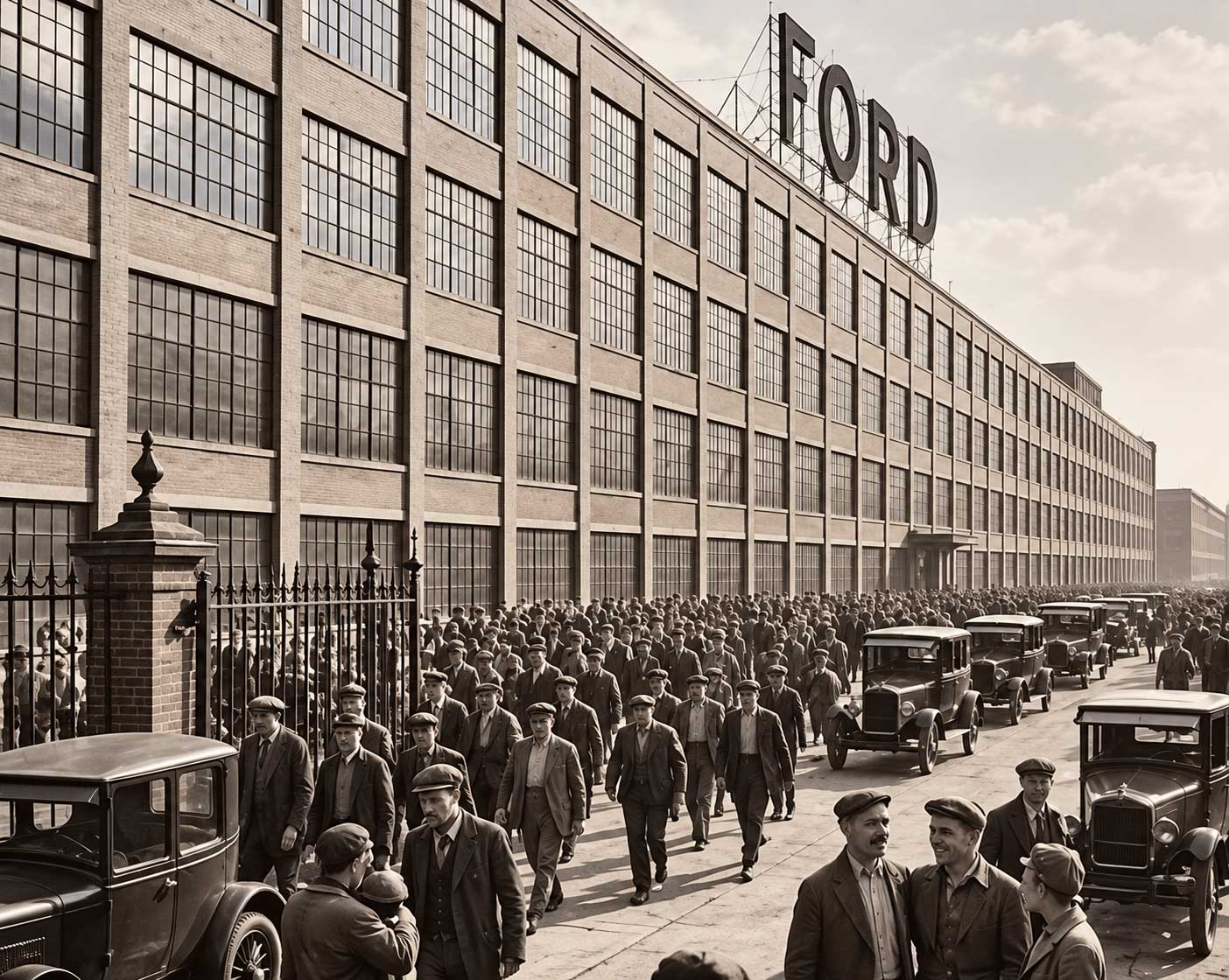
On 25 September 1926, Henry Ford publicly announced that his company had adopted a five-day, 40-hour working week, eliminating regular Saturday work while maintaining eight-hour working days. The policy had already been introduced for Ford factory workers on 1 May, with office employees following on 1 August.
The decision built on Ford’s earlier labour reforms. In 1914, the company had introduced the celebrated $5 daily wage alongside an eight-hour day. By the 1920s, Ford argued that greater leisure could stimulate consumption, giving workers both the time and purchasing power to participate in the growing consumer economy.
The five-day, 40-hour week soon became an influential industrial model, spreading beyond Ford and eventually becoming a defining feature of modern employment. A century later, Ford’s 1926 announcement remains a significant milestone linking productivity, leisure, wages and consumer mobility in the industrial age.