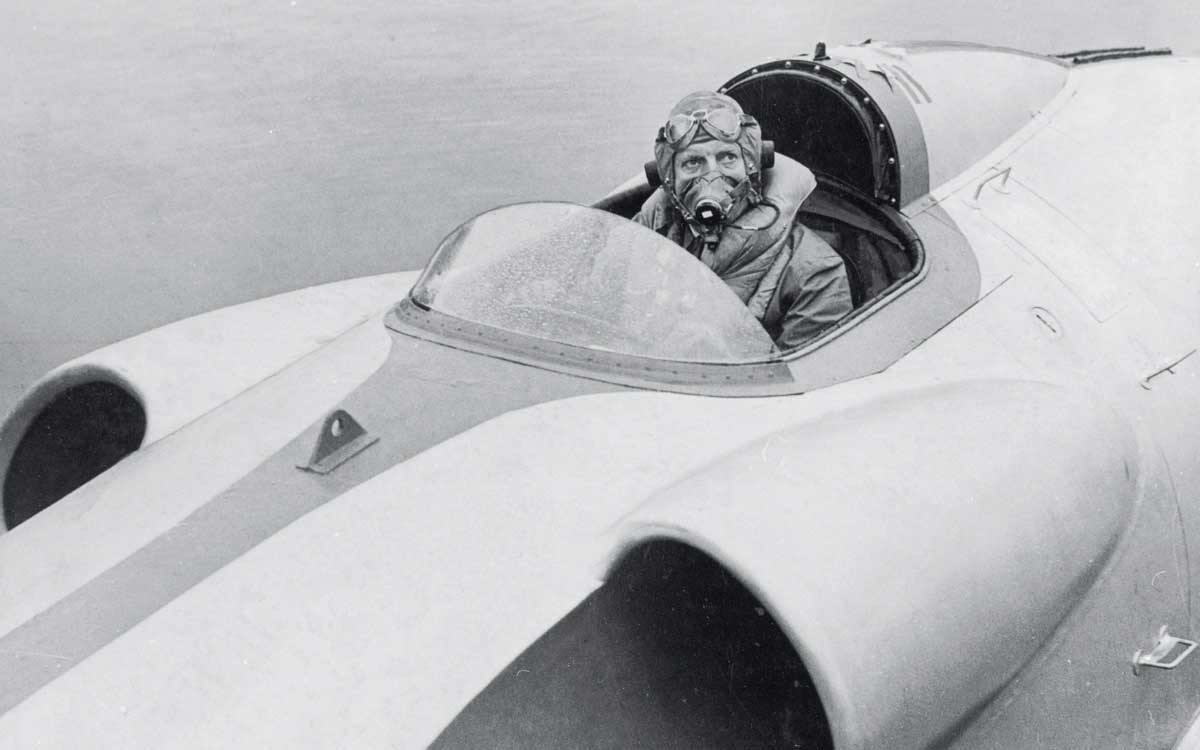
On 29 September 1952, British speed-record pioneer John Cobb took his jet-powered Crusader onto Scotland’s Loch Ness, attempting to capture the world water-speed record. Cobb already held the World Land Speed Record, having reached 394.19 mph at Bonneville in 1947. His ambition was to conquer another frontier.
Powered by a de Havilland Ghost turbojet producing around 5,000 lb of thrust, Crusader accelerated to an astonishing 206.89 mph on its first measured mile. However, the official water-speed record required a return run. As Cobb completed the run, the boat became unstable, struck a series of waves and disintegrated. Cobb was killed instantly.
His 206.89 mph run was never recognised as a world record, but it established the fastest speed then achieved on water. Crusader remained submerged in Loch Ness for decades before its wreckage was located during sonar and underwater investigations, adding another chapter to one of Britain’s most remarkable speed-record stories.