Reading Time: 4 Minutes
Editorial Standfirst
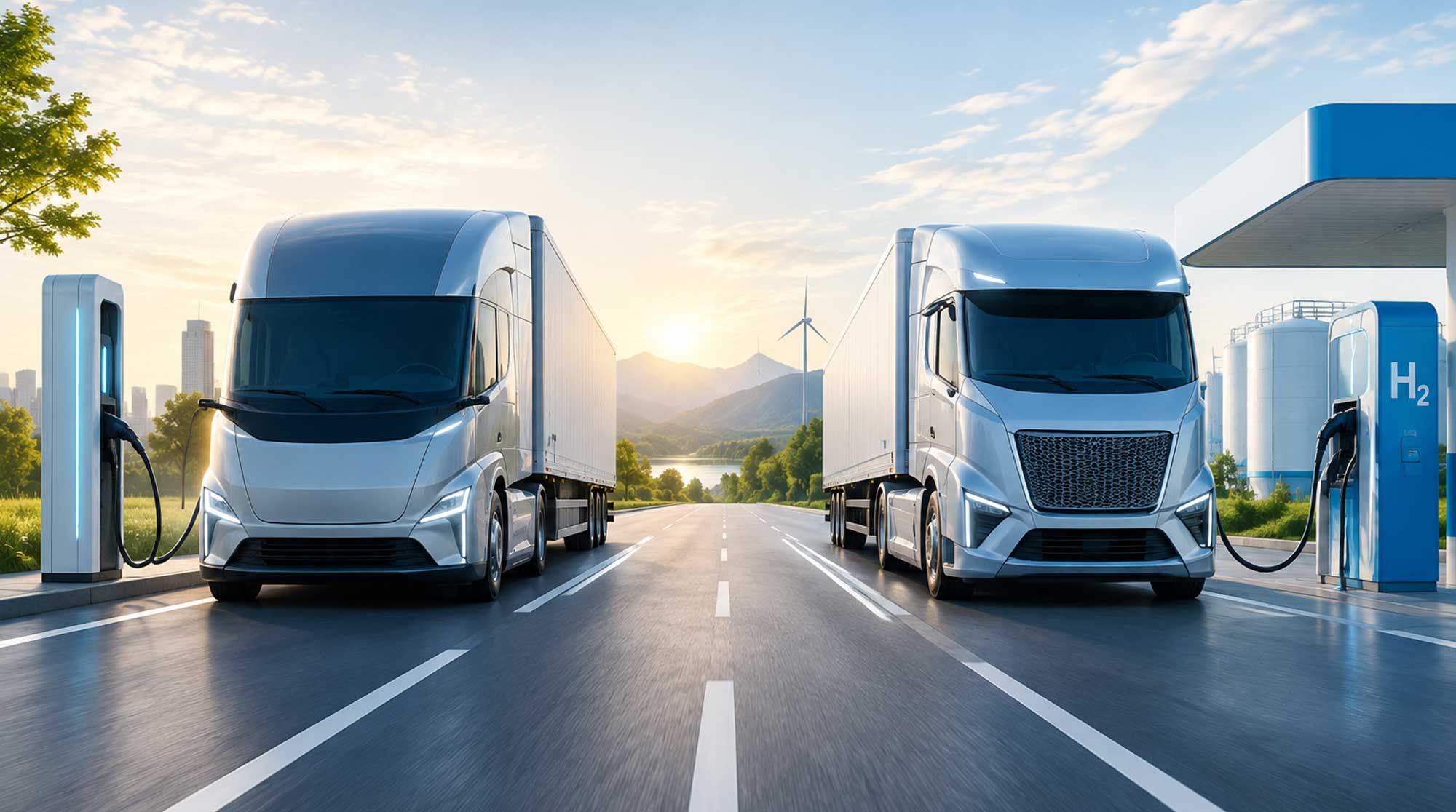
The electric transformation of heavy-duty transport is opening more than one technological pathway. Battery-electric trucks store electricity directly; fuel-cell electric trucks carry hydrogen and generate electricity on board. Both ultimately turn electricity into motion. But the way they store energy, replenish it and interact with infrastructure creates very different possibilities for the freight system.
TWO PATHWAYS TO ELECTRIC FREIGHT
The electric truck is no longer a single concept.
Battery-electric vehicles are already moving into commercial operations across an expanding range of applications, while fuel-cell technology is being developed for demanding heavy-duty missions where range, energy replenishment and utilisation can become decisive factors.
The technologies share an important foundation: electric propulsion. The difference begins with the way energy reaches the motor. That makes the comparison less about two competing types of truck—and more about two different ways of building an electric freight system.
ELECTRIC AT THE WHEELS — BUT NOT IN THE SAME WAY
A battery-electric truck takes electricity from the grid and stores it in a large traction battery. Power electronics then deliver that energy to the electric motor, while regenerative braking can recover part of the vehicle's kinetic energy.
A fuel-cell electric truck follows a more indirect route. Hydrogen is stored on board and fed into a fuel cell, where it reacts with oxygen from the air to produce electricity. That electricity powers the electric drivetrain, while a smaller battery can provide additional power during acceleration and store recovered energy.
The result at the wheels is remarkably similar: quiet, smooth electric propulsion with no combustion at the vehicle. The energy pathway, however, is fundamentally different.
THE BATTERY PATH
Battery-electric propulsion has one major advantage in the energy chain: relative simplicity. Electricity is stored directly and used to power the vehicle. There is no need to first produce hydrogen, transport it to the vehicle and then convert it back into electricity. That translates into high energy efficiency.
Current IEA analysis continues to identify battery-electric trucks as the dominant form of electric heavy-duty vehicle sales, with battery technology accounting for the overwhelming majority of electric truck sales globally.
The challenge is storage. A heavy-duty truck needs considerable energy, and carrying that energy means carrying a substantial battery. Charging must also be accommodated within the vehicle's operating pattern. But that challenge is changing as battery technology improves and high-power and megawatt charging expand.
THE HYDROGEN PATH
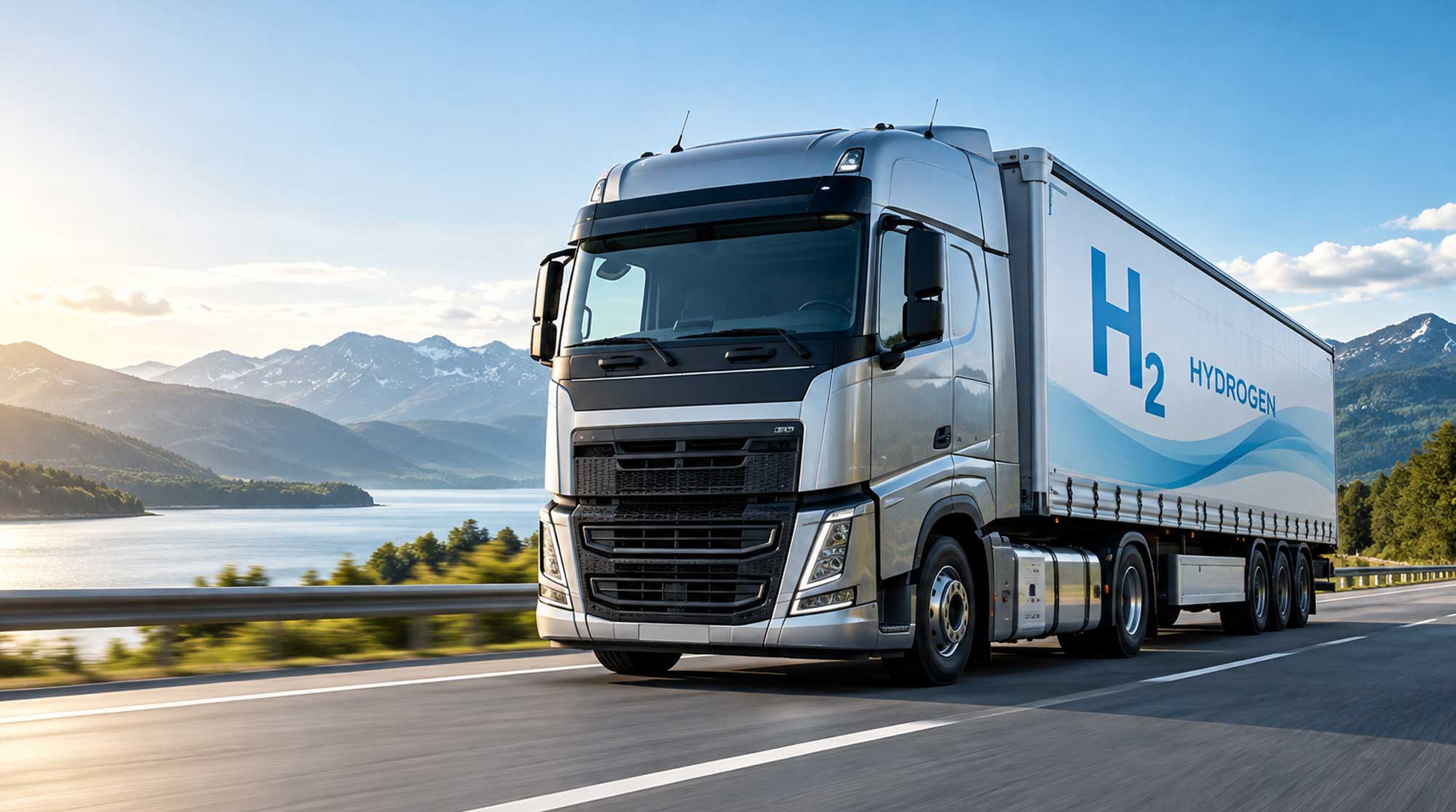
Fuel-cell trucks change the equation by carrying energy as hydrogen rather than storing the equivalent electrical energy in a very large battery. The fuel cell generates electricity as the vehicle travels. This can offer an attractive combination for operations where long range, high utilisation and rapid energy replenishment are particularly important.
Hydrogen, however, introduces another energy system behind the vehicle: production, compression or liquefaction, distribution, storage and refuelling. And the environmental advantage depends strongly on how that hydrogen is produced.
ICCT's analysis for India found that fuel-cell trucks using green hydrogen can achieve greenhouse-gas savings comparable to battery-electric vehicles, while hydrogen produced from natural gas without carbon capture provides much smaller reductions. The study also found that fuel-cell vehicles consume more electricity over their lifecycle because of conversion losses.
So, the hydrogen truck is not simply an electric truck with a different fuel tank. It is part of a different energy ecosystem.
WHERE THE ENERGY EQUATION CHANGES
This is where the two pathways begin to diverge most clearly. With battery-electric transport, electricity is converted into stored chemical energy in the battery and then back into electrical energy for propulsion. With fuel-cell transport, electricity is first used to produce hydrogen, hydrogen is transported and stored, and the fuel cell then converts it back into electricity.
Every additional conversion introduces energy losses. That gives battery-electric propulsion a fundamental efficiency advantage in many applications. But commercial transport is not an efficiency laboratory.
A truck must work. If a vehicle spends too much time waiting for energy, or if suitable charging infrastructure cannot support its route, theoretical efficiency may not translate directly into operational productivity. That is why the energy equation has to be considered together with the time equation.
CHARGING OR REFUELLING?
For battery-electric trucks, charging becomes part of the logistics schedule. A depot can charge vehicles overnight. A regional fleet can recharge between shifts. High-power corridor charging can be integrated into planned stops.
The opportunity is to make energy replenishment part of the normal operating rhythm rather than an additional interruption. Hydrogen takes a different approach. The vehicle arrives at a refuelling station, replenishes its hydrogen and returns to work. This can be attractive for high-utilisation operations where rapid energy replenishment is commercially important.
The trade-off is infrastructure availability. A charging station needs electrical capacity and appropriate grid connection. A hydrogen station needs hydrogen supply, storage and dispensing infrastructure. The energy stop may be shorter—but the energy network behind it is different.
THE WEIGHT OF ENERGY
For heavy-duty vehicles, energy storage is also a payload question. A large traction battery adds mass, although battery energy density continues to improve.
Hydrogen stores more usable energy by mass, but the vehicle requires tanks and fuel-cell equipment to handle it. The complete vehicle architecture therefore matters more than simply comparing the weight of the energy carrier itself.
This is particularly significant in long-haul freight, where range, payload and daily utilisation interact. The objective is not to carry the most energy. It is to carry enough energy to complete the mission without compromising the economics of the load.
THE INFRASTRUCTURE BEHIND THE TRUCK
Neither technology can succeed on vehicle technology alone. Battery-electric freight requires a charging ecosystem extending from depots to highways, backed by grid capacity, high-power equipment and increasingly dedicated truck-charging infrastructure.
Hydrogen requires an ecosystem of production, transport, storage and refuelling. That creates a fundamental difference in how each technology scales. Electricity is already an established energy network. Hydrogen for road freight requires additional infrastructure to be developed at scale.
The question, therefore, is not simply:
Can we build an electric truck?
It is:
Can we build the energy system that allows thousands of electric trucks to work every day?
ONE FUTURE. DIFFERENT DUTY CYCLES.
This is why the battery-versus-hydrogen debate can become misleading. A predictable regional delivery route with depot charging presents a different challenge from a high-utilisation long-haul operation crossing hundreds of kilometres every day. Urban distribution, regional freight, return-to-base fleets and some long-haul applications can increasingly fit battery-electric operation.
Fuel-cell technology may have a role in applications where long range, rapid refuelling and sustained utilisation create a stronger case—particularly if hydrogen becomes available at competitive cost and sufficient scale.
The answer is therefore increasingly determined by:
Route + Range + Payload + Energy + Infrastructure + Utilisation + Economics
There is no universal duty cycle. There may be no universal electric truck.
THE ELECTRIC TRACK AHEAD
Battery-electric technology currently has the stronger commercial position across much of the electric heavy-duty market. But that does not automatically close the door on fuel cells.
The future will be shaped by several variables moving simultaneously: battery costs and energy density, charging infrastructure, grid capacity, hydrogen production costs, refuelling networks, regulations and the operational requirements of freight.
The IEA's 2026 outlook shows that electric-truck deployment is accelerating, while the technologies and infrastructure supporting heavy-duty electrification continue to evolve. The transition, in other words, is not simply from diesel to electric. It is a transition from one dominant energy system to a more diverse electric-energy ecosystem.
The emBRWace Perspective
The most important question in electric freight may not be which technology wins.
It may be where each technology makes the most sense.
Battery-electric trucks can exploit the extraordinary efficiency of direct electrification. Fuel-cell trucks can offer another pathway where energy density, range and rapid replenishment become particularly valuable.
The commercial-vehicle industry therefore faces a more interesting challenge than choosing a single winner.
It has to match the energy pathway to the work.
emBRWace Explains
Battery-Electric Truck (BEV): Stores electrical energy in a large traction battery and uses it to power an electric drivetrain.
Fuel-Cell Electric Truck (FCEV): Stores hydrogen and converts it into electricity through a fuel cell to power an electric drivetrain.
Regenerative Braking: Recovers kinetic energy during braking or deceleration and converts it into electrical energy for storage.
Duty Cycle: The actual pattern of vehicle operation, including distance, payload, speed, stops, operating hours and energy-replenishment opportunities.
Green Hydrogen: Hydrogen produced using renewable electricity, typically through electrolysis, with substantially lower lifecycle emissions than hydrogen produced from fossil fuels.
Total Cost of Ownership: The complete economic picture of operating a vehicle, including acquisition, energy, maintenance, infrastructure and other operating costs.
Thought to Take Away
The electric future of freight may not follow one track. The real opportunity is finding the right energy pathway for every mission.
Sources: International Energy Agency (IEA), International Council on Clean Transportation (ICCT).