Reading time: 3 minutes
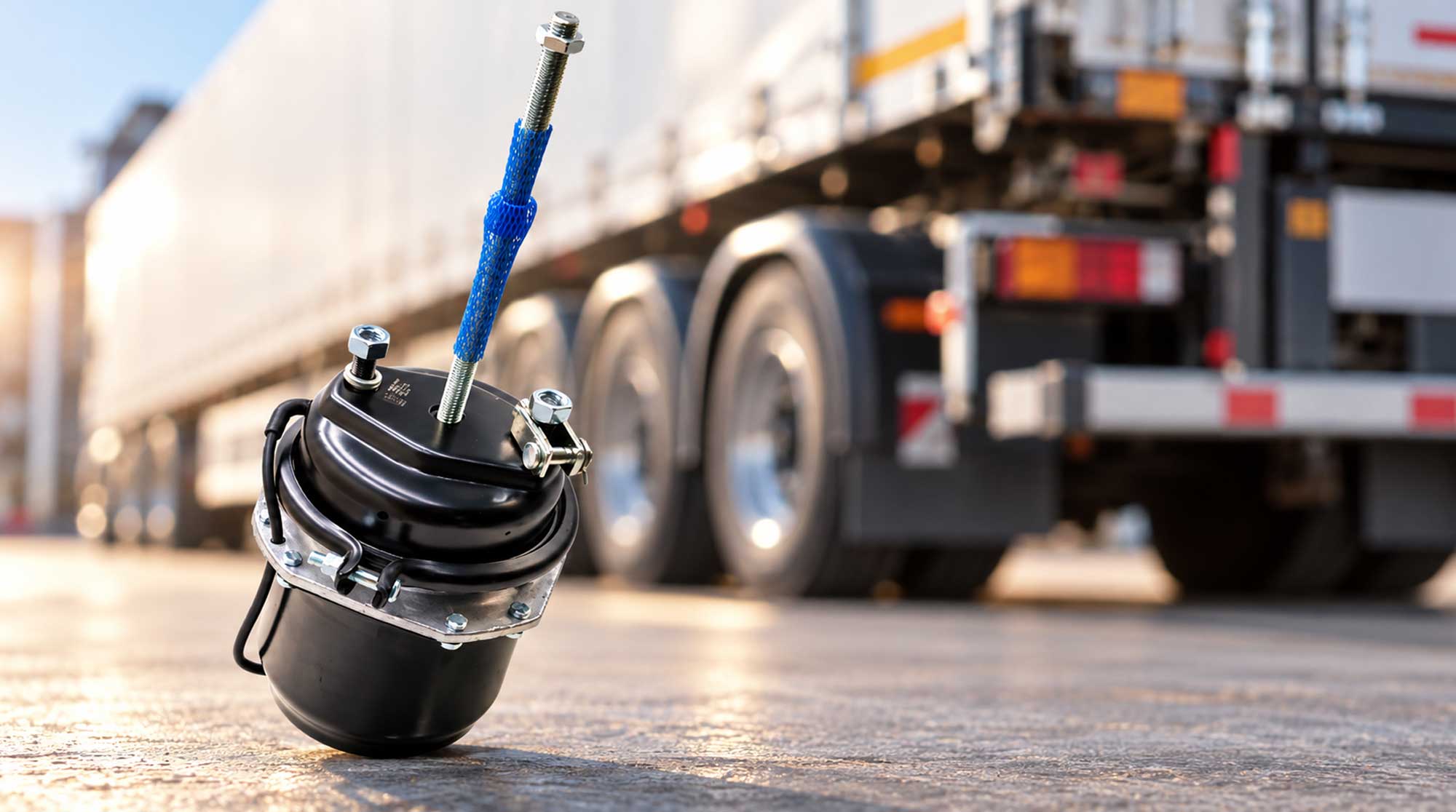
Heavy-duty trucks place substantial demands on their braking systems. High gross vehicle weight, heavy cargo, long operating hours and frequent braking cycles all raise the force needed to slow the vehicle. To meet that demand, the booster uses pneumatic or hydraulic assistance, depending on the braking configuration, to amplify what the driver puts in.
MORE THAN A LIGHTER PEDAL
It would be easy to describe the booster as the part that makes the pedal easier to press. That undersells it.
Its primary job is to multiply the force applied by the driver, so the braking system can build the pressure that heavy-duty applications call for. It also helps keep braking consistent through repeated applications and contributes to a smoother, more progressive feel as the brakes come on.
For a fully loaded truck, that assistance matters even more. The booster helps carry the driver's input efficiently through the braking system, supporting the controlled response needed to slow and stop a heavy vehicle.
BUILT FOR A HARD LIFE
A commercial-vehicle brake booster works in an environment where vibration, temperature variation, pressure fluctuations, dust, moisture and intensive braking cycles are simply part of the day. It has to keep performing through all of it.
Depending on the braking configuration, its construction can include robust housings, precision-engineered internal components, seals, diaphragms, springs, valves and other pressure-control components.
Durability, then, is not only a question of materials. It is about whether the component can go on providing reliable braking assistance throughout demanding operation.
WHEN THE PEDAL FEELS DIFFERENT
Changes in braking behaviour can indicate that the booster, or another part of the braking system, needs attention. The potential signs include:
- Increased brake-pedal effort
- Reduced braking assistance
- Unusual pedal feel
- Delayed or inconsistent brake response
- Air or vacuum-related leakage, depending on system design
- Abnormal braking performance
None of these, on its own, proves the booster is faulty. The braking system should be properly inspected and diagnosed by a qualified technician.
THE SYSTEM MATTERS
A brake booster does not work in isolation. Its condition can influence pedal feel, braking assistance and response, but those characteristics are also tied to the wider braking system. That is why correct diagnosis matters before any component is replaced.
For fleet operators and technicians, the aim is not simply to name a suspect part. It is to establish the actual cause of what the braking system is doing.
THE RIGHT BOOSTER FOR THE RIGHT TRUCK
Correct fitment carries particular weight with a safety-critical component.
For aftermarket applications, BRW positions its Heavy-Duty Brake Booster around precision, durability, reliable braking assistance and correct vehicle fitment. The booster should be matched to the specific truck model, braking-system configuration, OE/OEM reference number and application requirements. A correctly specified component is an essential part of ensuring the braking system operates as intended.
THE PART BEHIND THE PEDAL
The driver's action may begin with nothing more than a press of the brake pedal.
Behind it sits a system designed to turn relatively limited pedal input into the powerful, controlled braking action needed to slow a heavy-duty truck. The brake booster is one of the components that makes that transition possible.
The pedal starts the command. The booster helps deliver the force.
emBRWace Perspective
A brake booster may be a relatively compact component within a heavy-duty braking system, but its role connects driver input with the braking force needed to control a much larger machine.
In heavy-duty mobility, controlled braking begins with controlled force.
Thought to Take Away
The right braking force begins with the right component, correctly specified and properly maintained.