Reading Time: 4 Minutes
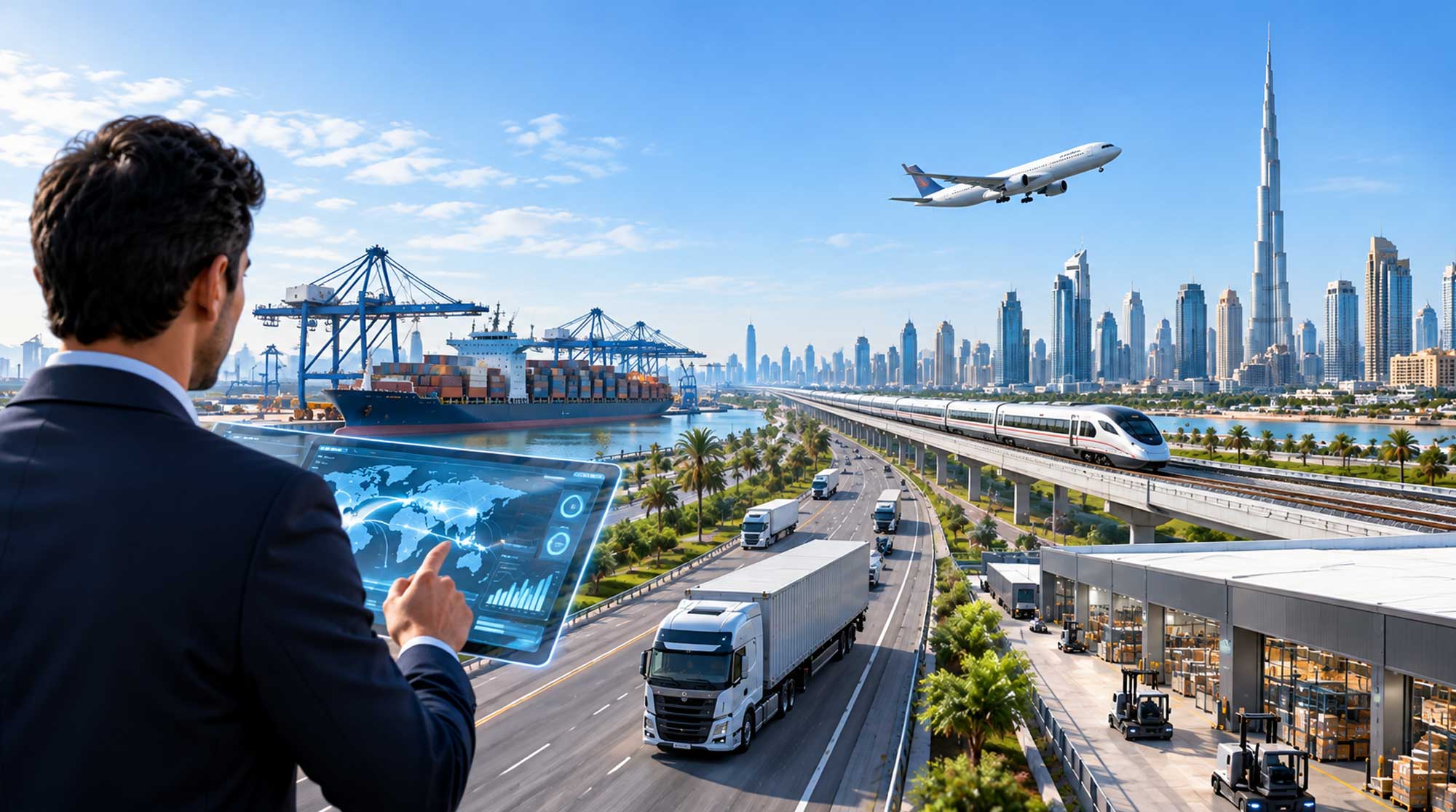
A multimodal corridor linking Europe, Egypt, Saudi Arabia and the Gulf is opening new freight-routing possibilities. Its real test is whether the extra flexibility and resilience justify the cost and complexity.
THE PRICE OF A FASTER ROUTE
A truckload of goods travelling from Europe to Doha during this year’s Gulf shipping disruption took 22 days via Egypt and Port of NEOM and cost around US$10,000, according to Reuters. That was nearly half the usual transit time. Before the disruption, shipping comparable cargo by sea had cost about US$2,500.
Four times the cost is a steep premium. Yet when supply chains are disrupted, delayed cargo carries its own price: lost sales, production stoppages and missed delivery commitments. That is the commercial equation behind a new approach to Europe–Gulf freight. By linking sea crossings with road transport and cross-border logistics, Port of NEOM is helping to create an alternative route between Europe, Egypt, Saudi Arabia and the wider Gulf.
The proposition is not that land-based transport can replace conventional shipping. It is that freight operators gain a valuable choice when established routes become too slow, unreliable or exposed to disruption. For businesses moving goods across borders, the question is no longer simply which route costs least. It is which route delivers the right balance of speed, cost and resilience when the stakes are highest.
WHY THIS MATTERS
An alternative corridor can help businesses protect supply continuity and respond to disruption. But its long-term value will depend on more than speed. Customs clearance, ferry schedules, road capacity, cargo handling and total landed cost will determine whether the route is commercially sustainable.
A LAND BRIDGE TAKES SHAPE
Port of NEOM’s emerging role is built on connecting sea and land transport, not on operating as an isolated port.
On 14 April, NEOM announced that Port of NEOM, together with Pan Marine and supported by DFDS and regional logistics partners, had enabled a multimodal corridor linking Europe, Egypt, NEOM and the Gulf Cooperation Council (GCC). It allows truck-carried freight to move from Europe to Egypt and on into the Gulf via Port of NEOM, as an alternative to container-only flows.
The corridor builds on Pan Marine’s RoPax service between Port of Safaga in Egypt and Port of NEOM, launched at the end of 2025. Pan Marine activated European connectivity at the end of March 2026 through its partnership with DFDS. A sea crossing connects Egypt with Saudi Arabia, and road transport carries freight onwards to destinations across the GCC and Iraq.
That can give selected shipments a different balance of transit time, flexibility and routing options. NEOM points to fast-moving consumer goods and other time-sensitive cargo, where late arrival can hit sales, production or distribution commitments.
SPEED HAS A PRICE
The reported Europe–Doha shipment illustrates the trade-off facing any business weighing an alternative route. Reuters reported that the importer tested the route with a single truckload and then ordered more, a sign that, for some cargo, the premium was judged worthwhile.
For urgent retail stock, high-value components or goods needed to avoid an expensive production stoppage, that may be right. For low-margin, bulky or easily replenished goods, conventional sea freight may remain the more economical choice.
The relevant measure is therefore not transit time alone. It is the total cost of delivering the shipment when it is needed, including freight charges, handling, insurance, customs, border delays, inventory carrying costs and the financial consequences of late delivery. A cheaper route that misses a critical delivery window may prove more expensive overall, while paying for speed makes little sense when the cargo can wait.
The best route is the one that meets the shipment’s requirements at an acceptable total cost, which is not necessarily the fastest or the cheapest in isolation.
RESILIENCE THROUGH ROUTE CHOICE
Supply-chain resilience is often discussed in terms of extra inventory, alternative suppliers or diversified production. Transport routing deserves equal attention.
For businesses dependent on Europe–Gulf trade, an alternative corridor offers another option when established shipping services face disruption. Port of NEOM sits on the Red Sea near the Suez Canal and close to the Arar border crossing, a key entry point into Iraq. An earlier pilot shipment from Cairo via Safaga to NEOM was reported by the Saudi Press Agency to have cut transit times by more than half.
But a route being available does not make it resilient. Businesses need to know whether the corridor can take their cargo, meet delivery requirements and provide visibility across each transport leg. Ferry schedules, customs procedures, border capacity and onward transport all shape the reliability of the whole journey.
The strategic benefit lies in preparedness. Identifying suitable alternative routes before disruption strikes lets logistics managers make informed decisions, instead of negotiating unfamiliar arrangements under pressure.
BEYOND THE PORT GATE
The next stage depends on how well the corridor ties port operations to inland logistics. In October 2026, Port of NEOM and CEVA Almajdouie Logistics signed a memorandum of understanding to explore integrated solutions across the Europe–Egypt–Saudi Arabia–GCC–Iraq corridor. It combines the port’s Red Sea location with CEVA Almajdouie’s transportation, customs brokerage, warehousing and cross-border logistics.
The announcement does not specify new scheduled services, additional capacity or an implementation timetable, so the proposed integration should not be treated as operational. For customers, effective integration could simplify shipment coordination and smooth the move from international arrival to inland distribution. Digital visibility, streamlined documentation and dependable schedules would help, but they must be matched by competitive pricing, adequate capacity and clear responsibilities when delays occur.
A larger port and a new transport link are important foundations. Their value rests on the quality and consistency of the service delivered to cargo owners.
CAPACITY WILL DETERMINE THE SCALE
A route that works for selected urgent shipments is not automatically ready to absorb large-scale freight diversion.
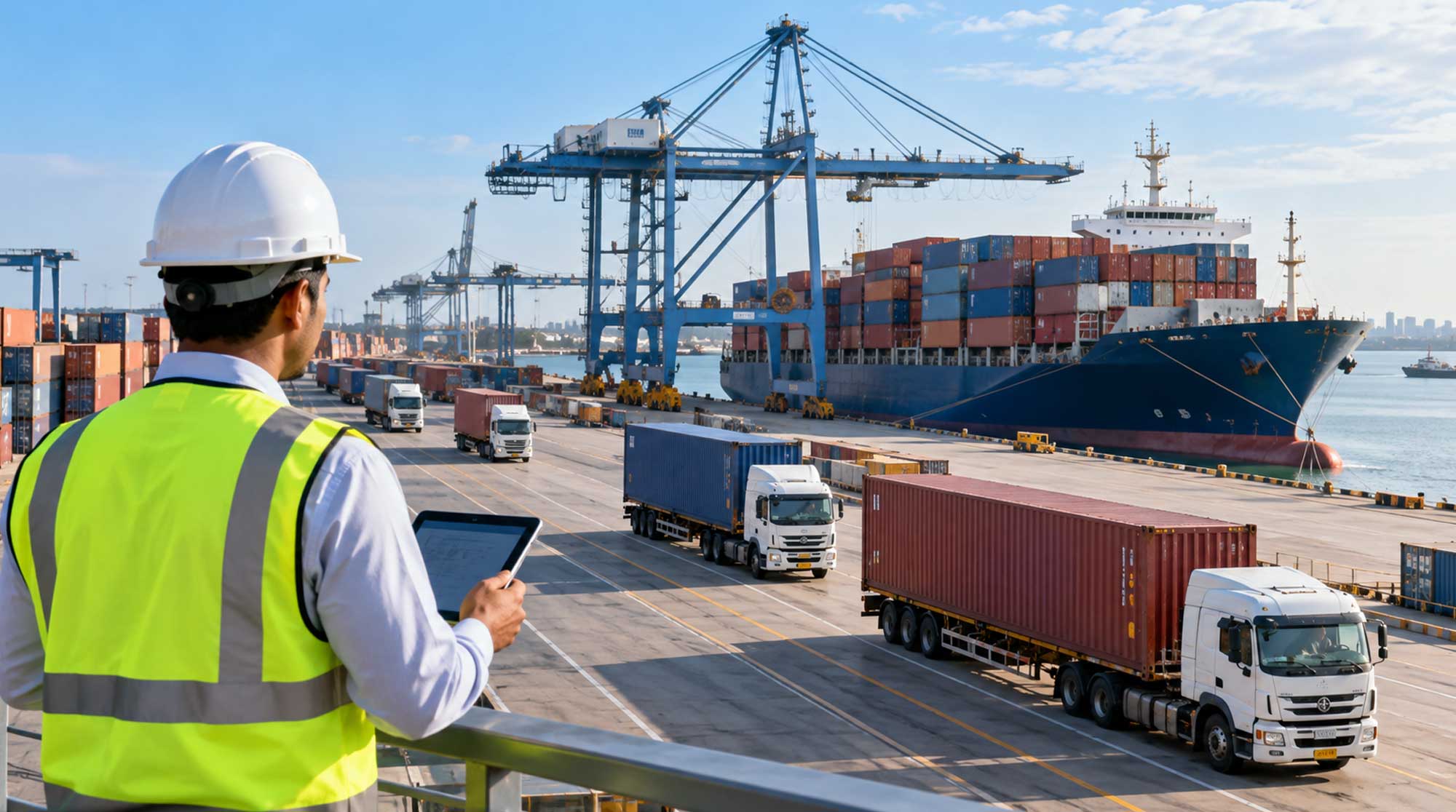
Port of NEOM handles general and project cargo, containers, bulk cargo, warehousing and roll-on/roll-off (RoRo) ferry operations. NEOM puts its current container capacity at 250,000 TEU, with 1.5 million TEU planned as its Terminal 1 container terminal comes online. The timing has moved. Earlier plans pointed to 2025, NEOM’s port page now says the terminal launches in 2026, and its Oxagon page speaks of phased openings from 2027, with 1.5 million TEU planned by 2030. Planned capacity must be distinguished from throughput already achieved.
The outside view is cautious. Kpler, the maritime analytics firm, told Reuters that NEOM remains a niche, RoRo-focused port with stable but limited activity, and that it had seen no sign of a surge in re-routed cargo since the Gulf disruption began.
Road transport has limits of its own. Trucks offer flexible delivery and direct inland access, but they cannot replicate the unit economics or carrying capacity of large container ships across every cargo category. Border throughput, driver availability, vehicle costs and the return-load market will shape the economics too. Port capacity alone cannot guarantee an efficient land bridge if ferry frequency is insufficient, border processing is unpredictable or inland transport cannot absorb what arrives.
The corridor is therefore best understood as an additional layer in the freight network, not a wholesale substitute for maritime shipping.
THE NEXT PHASE OF MULTIMODAL FREIGHT
The longer-term opportunity lies in giving cargo owners more control over the balance between cost, speed and risk.
For freight planners, the practical response is to assess routes by cargo category and business priority. Time-critical shipments may justify a premium for speed, routine replenishment may favour lower-cost maritime services, and strategically important goods may benefit from a validated alternative in place before disruption occurs. It also helps to decide in advance which shipments justify an alternative route, what premium is acceptable and which service conditions must be met, so that responding to a crisis takes less time.
The most effective logistics strategy will combine routes rather than depend on one. Port of NEOM’s emerging land bridge adds another option to the Europe–Gulf freight landscape. Its long-term significance will depend on whether that option can deliver consistent performance at a competitive total cost.
By the Numbers
22 days
is the reported transit time for a Europe–Doha truckload routed through Port of NEOM during the 2026 disruption.
US$10,000
is the reported cost per truckload for that shipment, against about US$2,500 by sea before the disruption.
250,000 TEU
is Port of NEOM’s current container capacity, according to NEOM.
1.5 million TEU
is the planned capacity once the new container terminal develops, with NEOM’s timing varying between 2026 and 2030 depending on the source.
TEU means twenty-foot equivalent unit. The transit-time and cost figures refer to a specific shipment reported during exceptional disruption, not standard service benchmarks.
emBRWace Perspective
Port of NEOM illustrates a broader shift in freight planning: connectivity is increasingly about having meaningful choices, not simply adding infrastructure.
The corridor’s potential lies in giving cargo owners another way to balance transit time, cost and delivery risk. Its success will depend on turning that potential into dependable services that work for specific cargoes and commercial requirements.
The real shift is not from sea to land. It is from dependence on a single route to the intelligence of having a choice.
Thought to Take Away
A resilient supply chain does not need every shipment to take the fastest route. It needs the right alternative when the usual route no longer works.
Sources: NEOM announcement of the European multimodal land bridge (14 April 2026); Port of NEOM and CEVA Almajdouie Logistics memorandum of understanding (October 2026); Reuters (2 June 2026); NEOM Oxagon and Port of NEOM information; Saudi Press Agency