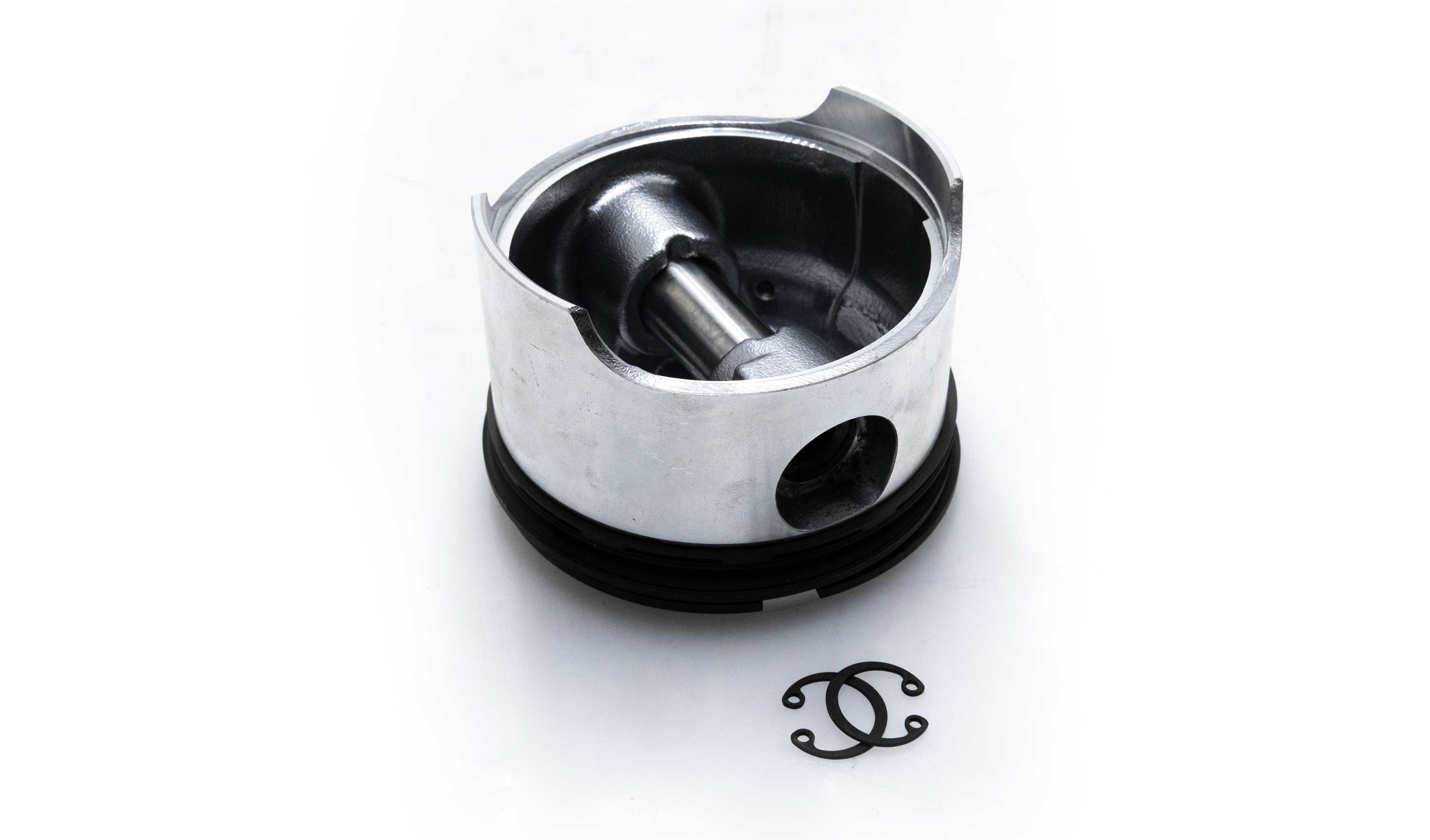
Deep inside a heavy-duty diesel engine, enormous forces are generated in a remarkably small space.
At the centre of that process is the piston.
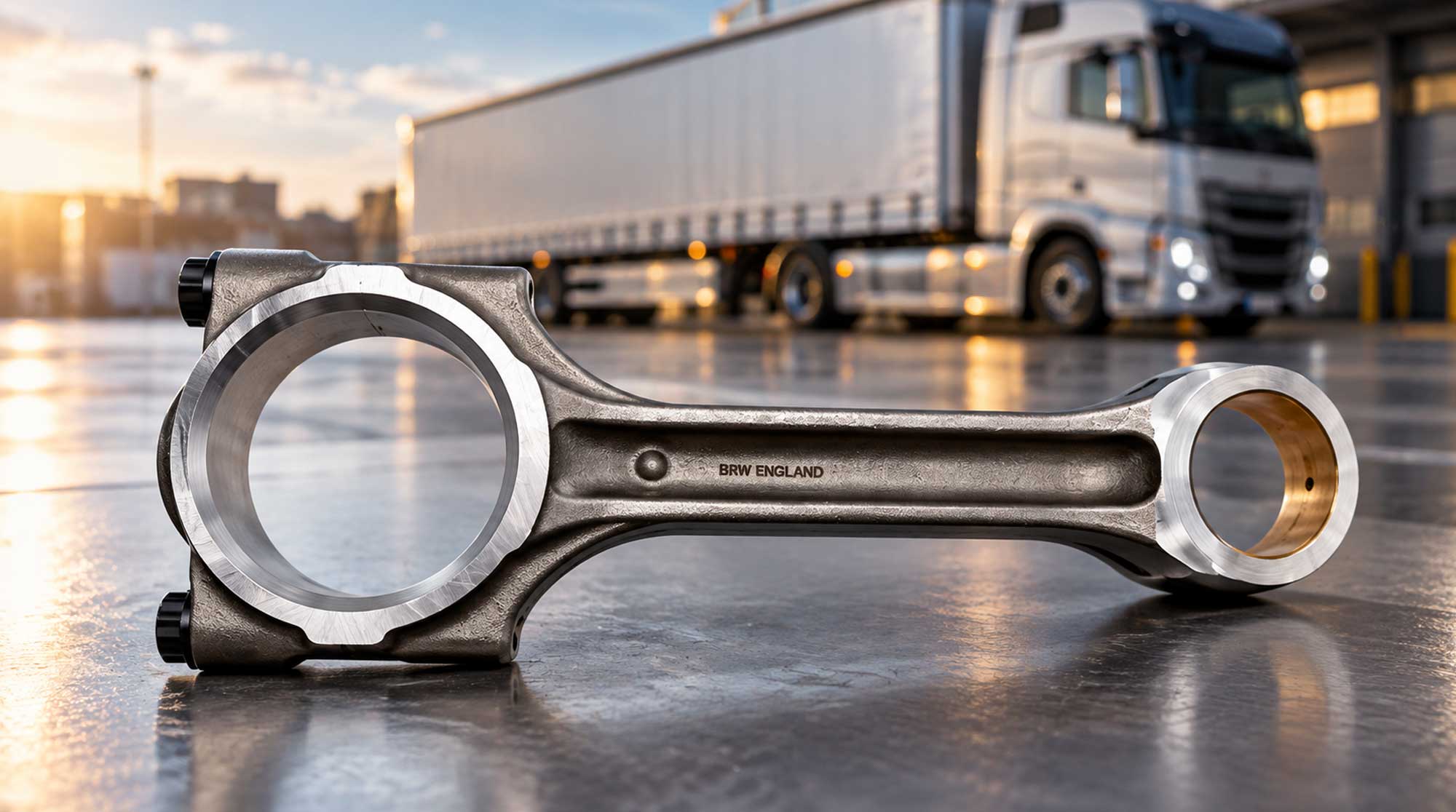
Moving continuously up and down inside the cylinder liner, the piston receives the pressure generated by combustion and transfers that force through the connecting rod to the crankshaft, where reciprocating movement becomes rotational power. It is a demanding role.
Every operating cycle exposes the piston to high combustion pressure, extreme temperatures, mechanical loading and rapid reciprocating movement. Precision, material strength and durability are therefore fundamental to dependable engine performance.
A Small Component Carrying a Big Load
The piston performs several functions simultaneously.
It transfers combustion force to the connecting rod. It helps maintain cylinder compression. It forms part of the combustion chamber and works with the piston-ring assembly to control combustion gases and lubricating oil. It also plays a role in transferring heat away from the combustion area towards the cylinder wall and cooling system.
All of this happens thousands of times during engine operation. A piston is therefore not simply a moving component. It is a precision-engineered link between combustion, compression, heat management and power generation.
Built for the Heavy-Duty Cycle
Heavy-duty trucks spend long hours carrying substantial loads across highways, construction sites, mining operations and demanding logistics routes. The engine must respond continuously.
The piston experiences repeated combustion pressure, thermal cycling, acceleration and deceleration, reciprocating movement, mechanical loading, friction-related forces and vibration.
A properly engineered piston must retain its functional characteristics through this continuous cycle. For heavy-duty applications, durability is therefore not simply about surviving a single high-load event. It is about maintaining reliable performance through thousands of repeated operating cycles.
Precision Inside the Cylinder
The piston does not work with the cylinder liner by chance.
It must operate within a specified clearance while maintaining the correct relationship with the piston rings, gudgeon pin, connecting rod and combustion chamber. Its dimensions, profile, ring-groove geometry, pin location and crown configuration all contribute to correct fitment.
An incorrect or poorly matched piston can contribute to problems such as excessive blow-by, abnormal oil consumption, piston slap, uneven wear, loss of compression and reduced engine efficiency. That is why piston selection must be based on the specific engine model, vehicle application, technical specifications, BRW part number and applicable OEM reference number.
The Crown Shapes the Combustion
At the top of the piston is the crown—the surface directly exposed to combustion.
In many diesel-engine designs, its shape forms an important part of the combustion chamber. Its geometry influences the movement and distribution of air and fuel during combustion. The correct crown profile, compression height, bowl or combustion recess configuration and other critical dimensions must therefore correspond to the engine's intended combustion characteristics.
Precision here is not cosmetic. It is part of the combustion process itself.
Working with the Rings
The piston never works alone.
The piston-ring assembly works around it to help seal combustion pressure, control lubricating oil and transfer heat towards the cylinder liner.
The ring grooves in the piston must maintain the correct geometry and positioning so that the rings can perform their functions effectively. A properly matched piston and piston-ring assembly therefore supports efficient compression and combustion while helping control oil consumption, combustion-gas leakage and premature wear.
Where Heat Becomes a Challenge
The piston operates in one of the hottest areas of the engine. Its crown is directly exposed to combustion temperatures, while other areas experience different thermal conditions.
Managing this heat is essential.
Excessive piston temperature can contribute to material deterioration, deformation, lubrication problems, ring damage and accelerated wear. Depending on engine design, lubrication and dedicated oil-cooling arrangements can help remove heat from the piston.
The piston must therefore function as part of the engine's wider thermal-management system.
When the Piston Shows Signs of Trouble
A piston-related problem can reveal itself in several ways.
Loss of engine power, reduced compression, excessive exhaust smoke, increased oil consumption, crankcase pressure or blow-by, abnormal piston noise, poor fuel efficiency and uneven engine performance can all be associated with piston-related issues.
Increased engine temperature, excessive piston or cylinder wear and difficulty starting may also occur. But these symptoms can have multiple causes. Proper inspection and diagnosis should therefore be carried out before a piston or associated component is replaced.
Why Quality Matters
For a component operating under such extreme pressure, temperature and mechanical loading, precision is fundamental. BRW Heavy-Duty Truck Pistons are developed with emphasis on precision, application-specific fitment, durability and dependable performance.
The correct piston must always be matched to the appropriate engine model, vehicle application, BRW part number and OEM reference to ensure compatibility. For workshops, distributors and fleet operators, that accuracy can make the difference between a component that simply fits and one that is correctly integrated into the engine system.
The Power Starts Here
Every heavy-duty journey ultimately depends on a chain of events that begins inside the cylinder.
- Air and fuel enter.
- Combustion creates pressure.
- The piston receives that force.
- The connecting rod transfers it.
- The crankshaft turns.
- And the power moves towards the wheels.
The piston is the point where the pressure of combustion becomes the movement that drives the engine.
Precision inside the engine. Power on the road.
Thought to Take Away
Inside every heavy-duty engine, enormous power begins with a piston built to withstand it, control it and pass it on.