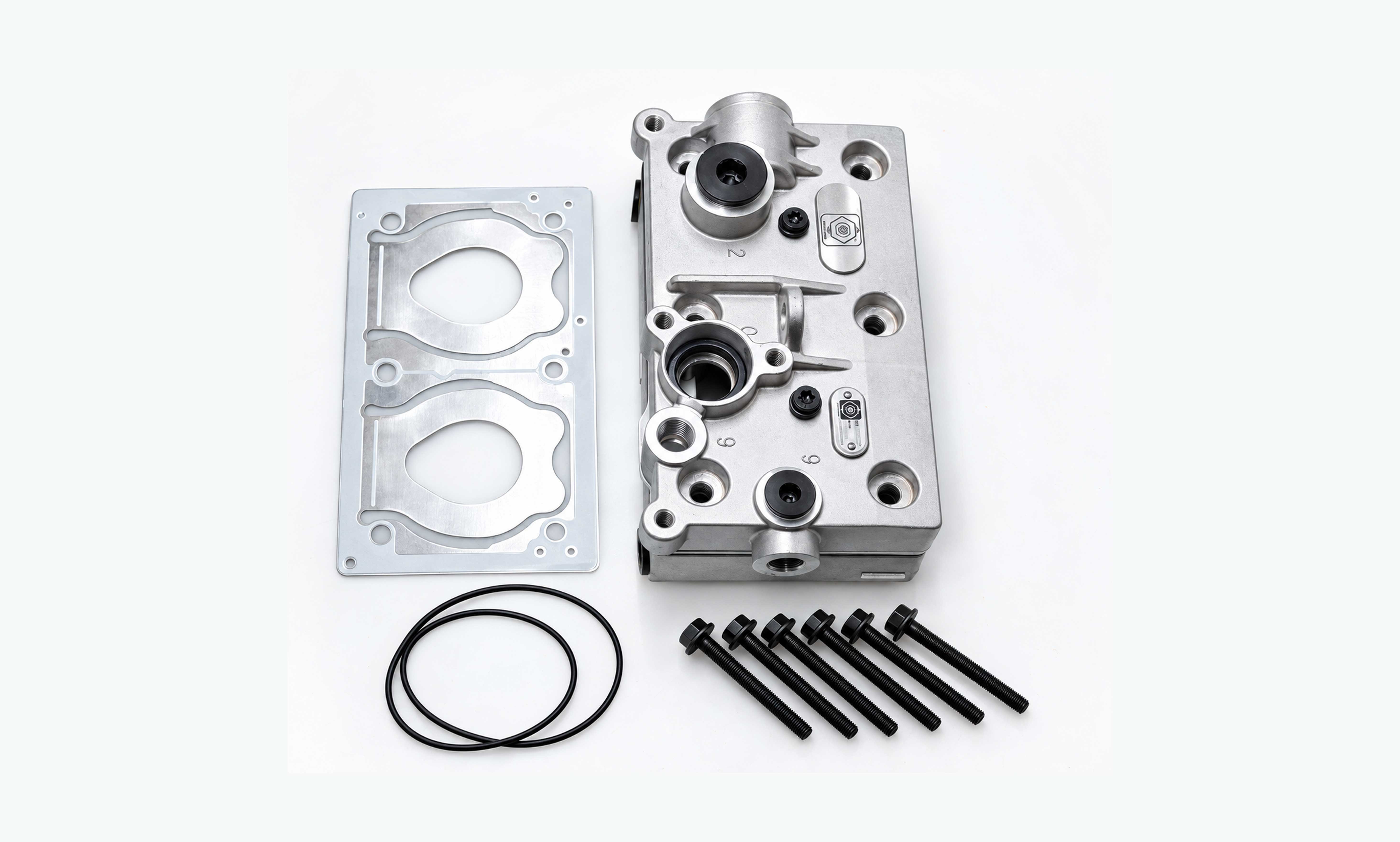
Mounted securely on top of the engine block, the cylinder head forms the upper section of the combustion chamber.
But its role extends far beyond simply closing the engine. Depending on engine design, it houses and supports critical components including intake and exhaust valves, valve guides, valve seats and injectors. It works together with the cylinder block, head gasket, pistons and valvetrain to maintain the conditions required for efficient combustion.
In a heavy-duty truck, this means operating reliably under high combustion temperatures, significant cylinder pressures, continuous loads and long operating hours.
Managing the Flow
Every combustion cycle depends on controlled gas movement.
The cylinder head incorporates precisely engineered passages that allow fresh intake air to reach the combustion chamber and exhaust gases to leave it.
Efficient airflow through these passages influences combustion, engine power, fuel efficiency and emissions performance. The geometry and condition of these passages therefore matter. So do the mounting locations, machined surfaces and alignment points that allow the associated engine components to function correctly.
Sealing Under Pressure
Combustion generates enormous pressure inside the cylinder. The cylinder head must help contain that pressure while maintaining a reliable seal between the head and engine block.
Its precision-machined surfaces provide the mating and sealing areas required for correct installation of the head gasket. A properly engineered cylinder head helps maintain compression and combustion-chamber sealing while reducing the possibility of compression loss, coolant leakage, oil contamination or combustion-gas leakage.
Managing the Heat
The cylinder head also has an important role in temperature management. Internal coolant passages allow engine coolant to circulate around areas exposed to high combustion temperatures, transferring heat away from the combustion chamber and helping control thermal stress.
This becomes particularly important in heavy-duty trucks operating under high loads, demanding terrain, long-distance duty cycles or high ambient temperatures. A cylinder head must therefore combine thermal resistance, dimensional stability and structural strength with dependable sealing performance.
When Precision Matters
A cylinder head operates within a highly demanding environment. Small deviations in critical surfaces, mounting points or valve-seat areas can affect the way the engine performs.
A damaged, cracked, warped or improperly sealed cylinder head can contribute to:
- Loss of compression
- Coolant consumption
- Engine overheating
- Excessive exhaust smoke
- Poor engine performance
- Misfiring
- Oil contamination
- Reduced fuel efficiency
In severe cases, continued operation with a compromised cylinder head can lead to further engine damage.
Why Quality Matters
The cylinder head brings several engine functions together: combustion, airflow, sealing and heat management. That makes manufacturing precision particularly important.
BRW Cylinder Heads are designed with emphasis on precision manufacturing, durability, dependable performance and application-specific compatibility. Accurate machining of critical surfaces, valve-seat areas, mounting points and internal passages supports reliable engine operation when the component is correctly matched to its application.
Correct installation is equally important. Proper torque procedures, appropriate gasket selection and thorough inspection of associated components are essential for achieving the intended performance and service life.
The Critical Interface
The cylinder head sits at a fascinating point in the engine.
It is where air enters, fuel is introduced, combustion takes place and exhaust gases begin their journey out. At the same time, it must contain pressure, manage heat, support critical components and maintain precise sealing. That combination makes it one of the engine's most demanding structural and functional components.
The Top of the Engine's Core
Knowing a cylinder head means understanding more than its position on the engine.
It means recognising how airflow, combustion, sealing, cooling and component alignment come together within one precisely engineered assembly.
The cylinder head may sit above the engine block—but its role reaches into almost every aspect of engine performance.
Thought to Take Away
A cylinder head does more than containing combustion. It creates the conditions in which the entire combustion process can perform at its best.