Reading Time: 4 Minutes
Editorial Standfirst
A heavy-duty engine is far more than a source of horsepower. It is a carefully coordinated system in which air, fuel, combustion, lubrication, cooling, exhaust management and electronic control work together to produce reliable power. Understanding how these systems interact is the first step towards understanding the parts that keep a commercial vehicle moving.
THE POWER BEHIND THE LOAD
A loaded truck climbing a gradient, accelerating onto a highway or pulling a trailer across thousands of kilometres is asking a great deal from its engine.
The engine must convert the chemical energy in fuel into mechanical power, deliver that power efficiently across changing speeds and loads, manage heat and friction, and increasingly control emissions with remarkable precision. That is why calling the engine simply the “heart of the truck” only tells part of the story. Like the human body, its performance depends on many systems working together.
MORE THAN AN ENGINE
Look beneath the engine cover and the complexity becomes clear. There is an air system supplying the oxygen needed for combustion. A fuel system delivers precisely controlled quantities of fuel. The cylinders, pistons, connecting rods and crankshaft convert combustion pressure into mechanical rotation. Around this core are the systems that keep the process under control.
The lubrication system reduces friction and protects moving parts. The cooling system carries away excess heat. The exhaust system manages gases leaving the engine. Turbocharging can increase the amount of air entering the cylinders, while electronic controls continuously coordinate engine operation.
Modern heavy-duty engines increasingly integrate these systems as one electronically managed architecture.
WHERE THE ENERGY BEGINS
The fundamental process is deceptively simple:
Air + Fuel → Combustion → Pressure → Mechanical Motion
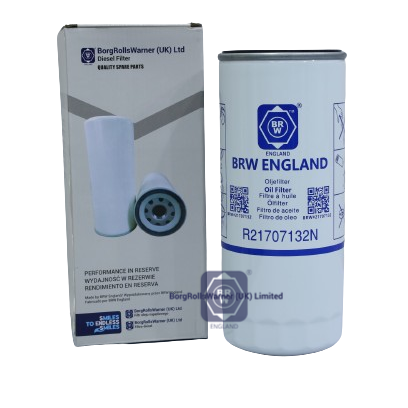
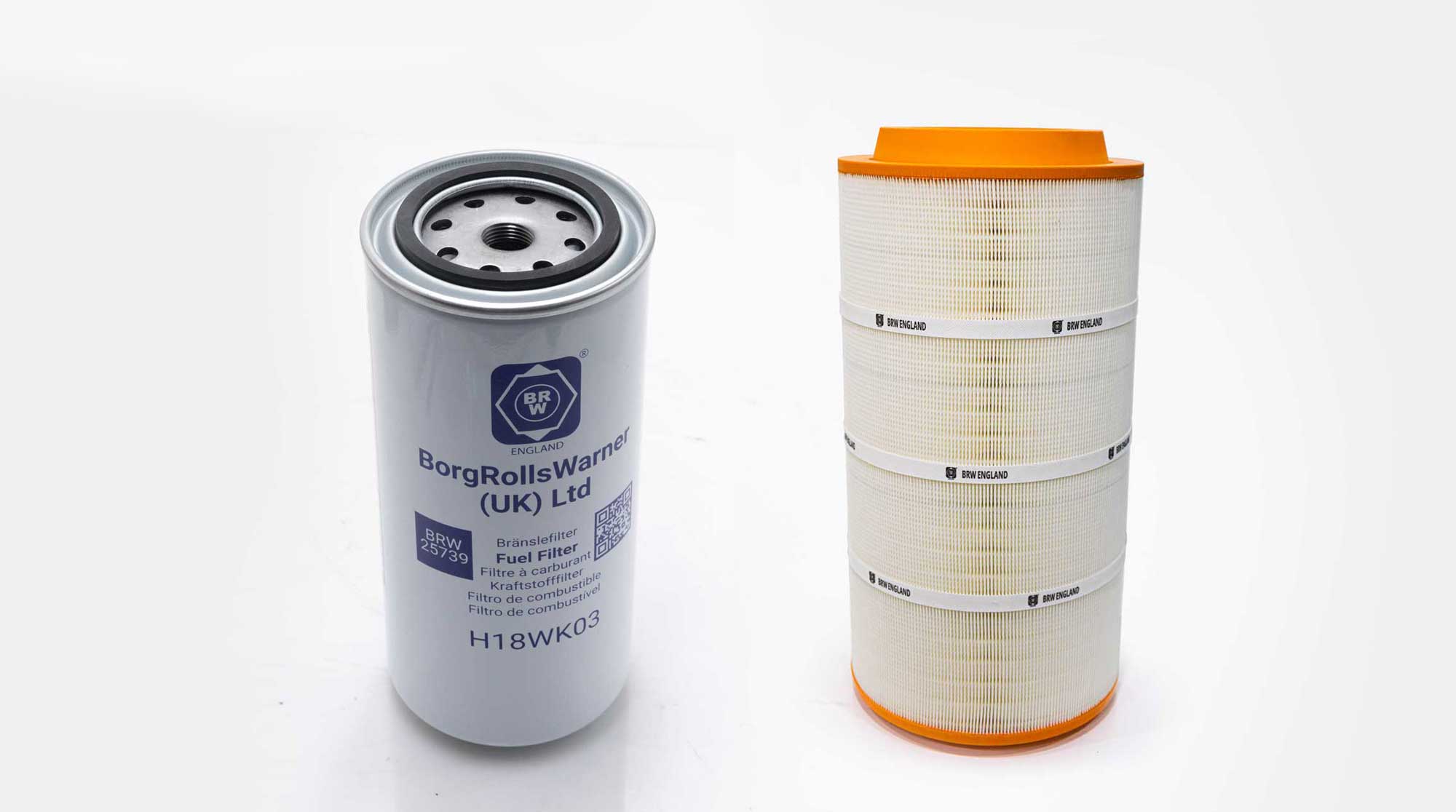
Air enters through the intake system. The air filter removes contaminants before the air reaches the engine. A turbocharger can compress incoming air, increasing the amount available for combustion. In many engines, charge-air cooling further improves the conditions before the air enters the cylinders.
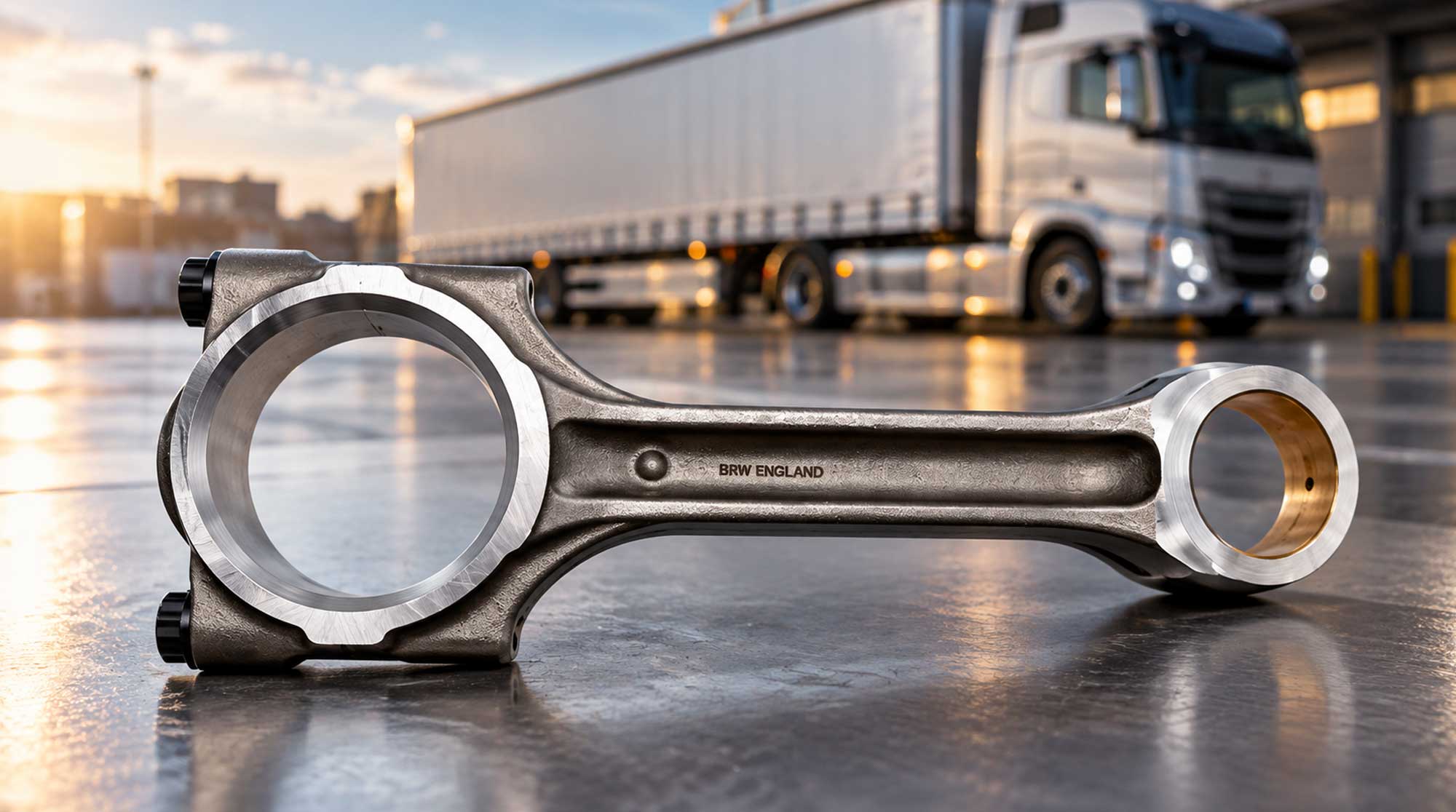
At the same time, the fuel system delivers precisely metered fuel. Inside the cylinder, combustion creates pressure that pushes the piston. The connecting rod transfers that force to the crankshaft, converting the piston's reciprocating movement into rotation. That rotation is the beginning of the power that ultimately reaches the wheels.
THE PARTS JOURNEY
Follow the energy—and the parts that make the journey possible.
1. AIR ENTERS
Air Filter → Turbocharger → Charge-Air Cooler → Intake Valve → Cylinder
Clean, compressed and cooled air enters the cylinder.
↓
2. FUEL IS DELIVERED
Fuel Tank → Fuel Filter → High-Pressure Fuel System → Injector → Cylinder
Fuel is filtered, pressurised and precisely injected into the cylinder.
↓
3. COMBUSTION CREATES FORCE
Air + Fuel → Combustion → Cylinder Pressure → Piston
The combustion process creates pressure that pushes the piston downward.
↓
4. FORCE BECOMES ROTATION
Piston → Connecting Rod → Crankshaft
The connecting rod transfers piston movement to the crankshaft, converting reciprocating motion into rotary motion.
↓
5. POWER LEAVES THE ENGINE
Crankshaft → Flywheel/Flexplate → Transmission → Driveline → Wheels
The crankshaft's rotation is transferred through the drivetrain to propel the vehicle.
THE SYSTEMS THAT SUPPORT THE JOURNEY
The five stages above describe the primary path from air and fuel to vehicle movement. Around that path, several supporting systems operate continuously to keep the engine performing reliably.
LUBRICATION
Oil pump → oil filter → oil galleries → bearings and moving parts
Oil reduces friction, carries away heat from critical areas and helps protect engine components from wear.
COOLING
Water pump → engine passages → thermostat → radiator
Coolant circulates through the engine to control operating temperature and carry excess heat away.
AIR MANAGEMENT
Turbocharger → charge-air cooling → intake
The air-management system controls the quantity and condition of air available for combustion.
ELECTRONIC CONTROL
Sensors → Engine Control Unit → injectors and actuators
Modern engine controls continuously monitor operating conditions and adjust key functions such as fuel delivery and air management.
EXHAUST & AFTERTREATMENT
Exhaust manifold → turbocharger → aftertreatment → tailpipe
Exhaust energy can drive the turbocharger, while aftertreatment systems process pollutants before the gases leave the vehicle.
Together, these supporting systems allow the main power-producing process to operate efficiently, reliably and within required emissions limits.
EVERY PART HAS A JOB
The engine works because its components perform different jobs at exactly the right time. The air filter protects the engine from airborne contaminants. The turbocharger uses exhaust energy to compress intake air, helping the engine produce power efficiently across its operating range. Modern turbocharger architectures can be fixed-geometry, wastegate or variable-geometry designs, depending on the engine and application. The fuel injector delivers fuel with precision. The piston receives the force of combustion.
The connecting rod transfers that force. The crankshaft turns it into rotary motion. The lubrication system keeps moving surfaces protected. The cooling system manages engine temperature. The exhaust and aftertreatment systems manage the gases produced by combustion. And behind much of this coordination is the engine control system, using sensors and electronic controls to regulate functions such as fuel injection, air management and overall engine operation.
No component works in isolation.
WHEN ONE PART FALLS OUT OF BALANCE
This is where component knowledge becomes useful.
A restricted air filter can affect airflow. A fuel-system problem can disturb fuel delivery. Lubrication problems can increase friction and accelerate wear. Cooling-system problems can push temperatures beyond safe operating conditions.
A problem in one area can therefore influence the performance of another. The same principle applies to modern emissions systems. Exhaust aftertreatment can include components such as a diesel oxidation catalyst, diesel particulate filter, selective catalytic reduction system and associated sensors and dosing equipment. These systems work together to control pollutants in the exhaust stream.
Understanding the engine as a system makes it easier to understand why maintenance is not simply about replacing a failed part. It is about preserving the balance between the parts.
POWER IS ONLY PART OF THE STORY
For a commercial vehicle, engine performance cannot be measured only in horsepower.
The real objectives are broader:
- Power.
- Torque.
- Fuel efficiency.
- Reliability.
- Durability.
- Emissions performance.
- Uptime.
A heavy-duty engine may spend thousands of hours operating under changing loads and conditions. Its components therefore have to work not only efficiently, but consistently.
That is why modern engine development is increasingly about system integration—bringing together combustion, air handling, fuel delivery, electronic controls and exhaust aftertreatment to achieve the required balance of performance, efficiency, durability and emissions compliance.
THE ENGINE IS A SYSTEM
The most useful way to understand a commercial-vehicle engine is not to look at its components separately.
Follow the energy.
- Air enters.
- Fuel is delivered.
- Combustion creates pressure.
- The piston moves.
- The crankshaft turns.
- The drivetrain carries the power forward.
Around that process, oil protects, coolant removes heat, turbocharging manages airflow, electronics coordinate the system and aftertreatment manages the exhaust. Every part has a purpose. Every system has a relationship with another. And the truck depends on all of them.
Thought to Take Away
A powerful engine is not simply a collection of powerful parts. It is a system in which every part has a job—and every job matters.