Reading Time: 3 Minutes
WHERE MOVEMENT MEETS CONTROL
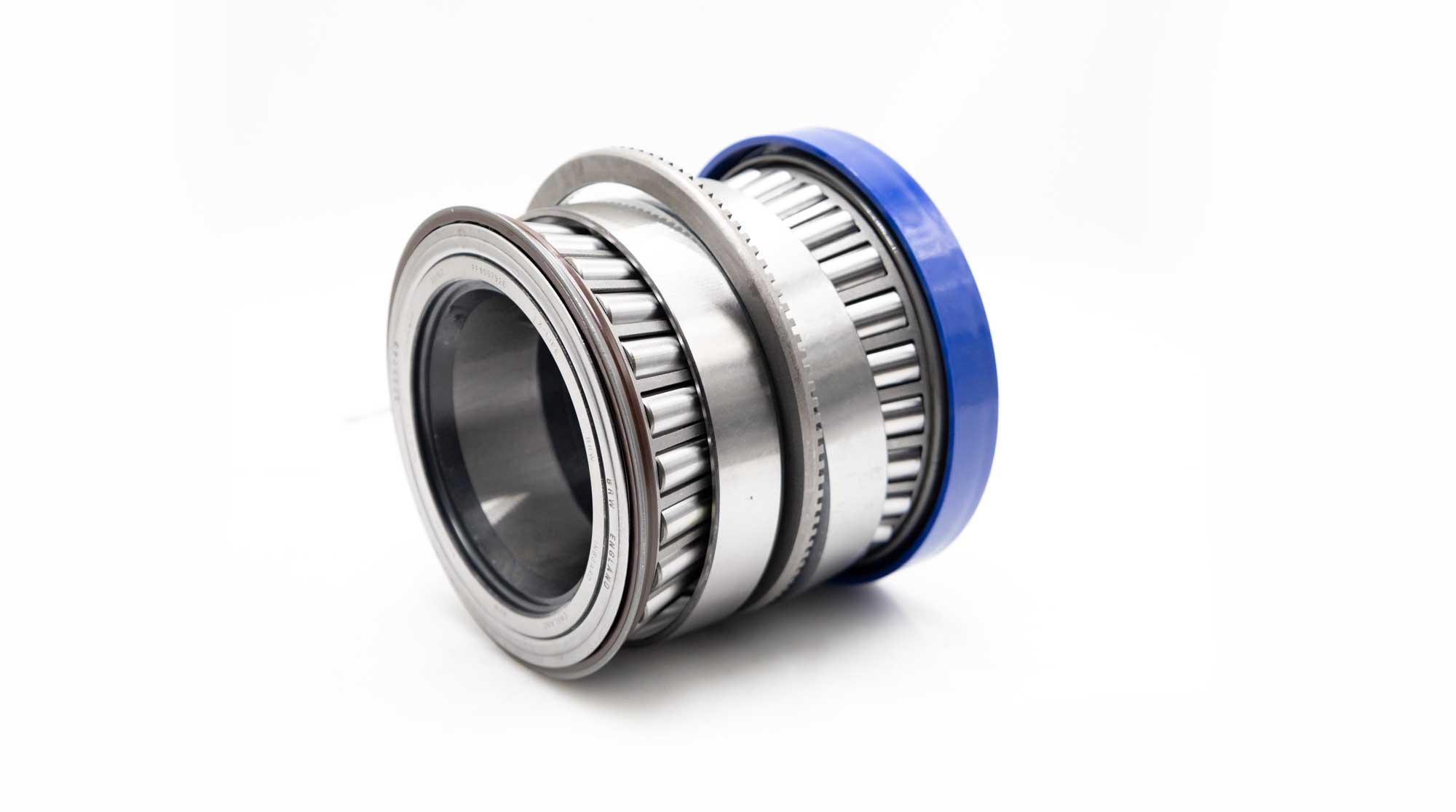
Movement is fundamental to every commercial vehicle. Shafts rotate, wheels turn and drivetrain components transfer power continuously, often under demanding loads. Behind much of this movement is a component designed to make rotation more controlled — the bearing.
A bearing supports shafts and moving parts while helping minimise friction, vibration and mechanical wear. In a heavy-duty vehicle, that seemingly simple role becomes critical because the component may operate continuously under high loads and changing conditions.
THE JOB BEHIND THE ROTATION
A bearing does not create movement. It helps movement happen efficiently.
By providing controlled support between moving components, it allows a rotating assembly to operate with reduced friction. This helps protect the components around it while supporting smoother and more consistent mechanical operation.
In commercial vehicles, that function can extend across wheel assemblies, drivetrain systems, rotating shafts and other mechanical applications where load support and controlled movement are required.
The principle is straightforward:
Support the load. Control the movement. Reduce the friction.
BUILT TO CARRY THE LOAD
Heavy-duty bearings operate in environments very different from those encountered in light-duty applications. Commercial vehicles can generate substantial radial and axial loads, while continuous rotation, vibration, temperature variations, shock loads and heavy payloads place additional demands on rotating components.
Long-distance transportation adds another challenge — extended operating cycles with little opportunity for components to stop and recover. BRW Heavy-Duty Bearings are designed around these demanding conditions, with a focus on load-carrying capability, durability, wear resistance and dependable performance.
PRECISION MATTERS
A bearing's performance depends on more than its ability to carry a load.
Dimensional accuracy, material quality, surface finish and correct fitment all contribute to how effectively a bearing performs within its intended assembly.
Precision manufacturing helps maintain proper alignment and allows the bearing to operate as designed. This supports smoother rotation, reduced friction and better protection of the surrounding components.
For a heavy-duty application, precision is therefore not simply a manufacturing characteristic.
It is part of performance.
WHEN FRICTION BECOMES THE PROBLEM
A bearing's purpose becomes particularly clear when friction, wear or mechanical stress begins to increase.
Excessive friction can affect the smooth operation of a rotating assembly. Wear can compromise the intended relationship between moving components. Vibration and repeated mechanical loading can place additional stress on the assembly.
The consequences are not limited to the bearing itself. A bearing works as part of a larger mechanical system. Its condition can influence the components it supports and the way that assembly operates.
That is why bearing selection, installation, lubrication and maintenance all matter to long-term service performance. BRW specifies that its bearings are designed for dependable service when correctly selected, installed, lubricated and maintained.
WHERE BEARINGS WORK
There is no single application for a heavy-duty bearing.
Depending on the bearing type and vehicle application, BRW Heavy-Duty Bearings can be used in truck, trailer, bus and commercial vehicle assemblies, including wheel assemblies, drivetrain systems and applications involving rotating shafts.
This variety makes correct application particularly important. The bearing must match the requirements of the assembly — including its dimensions, operating loads and intended mechanical function. The right bearing is not simply one that fits. It is one that fits the application.
THE RIGHT BEARING FOR THE RIGHT APPLICATION
Heavy-duty vehicle components operate as interconnected systems.
A bearing selected for a particular application needs to work within the conditions for which the assembly was designed. Correct selection and installation are therefore fundamental to achieving the intended performance.
Lubrication and maintenance also play their part.
When these factors come together, the bearing can perform its essential role without becoming the focus of attention — supporting rotation, managing loads and helping the surrounding assembly operate reliably. That is often the mark of a good mechanical component.
It does its job quietly, continuously and precisely.
WHY QUALITY MATTERS
For BRW, bearing development centres on quality, precision and dependable performance for the heavy-duty aftermarket.
The company's Heavy-Duty Bearings are designed to support demanding commercial-vehicle applications, with emphasis on dimensional accuracy, material quality, durability, wear resistance and consistent operation.
For workshops, distributors, fleet operators and commercial vehicle maintenance professionals, the objective is straightforward: a replacement component that can perform reliably within the intended application.
PRECISION IN EVERY ROTATION
A bearing may not be one of the most visible components on a commercial vehicle.
But every time a supported shaft rotates, a wheel turns or a drivetrain component moves, the bearing is part of that mechanical story.
- It carries load.
- It controls friction.
- It supports movement.
- And it helps the larger assembly keep doing its job.
The precision behind every rotation can help keep the journey moving.
PARTS ZONE
Understanding the parts that keep mobility moving.
BRW Heavy-Duty Bearings are developed for demanding commercial vehicle applications, combining precision engineering, load-carrying capability, durability and dependable performance.
BRW Heavy-Duty Bearings — Precision in every rotation. Reliability in every journey.
Thought to Take Away
Every smooth rotation depends on something designed to support it.