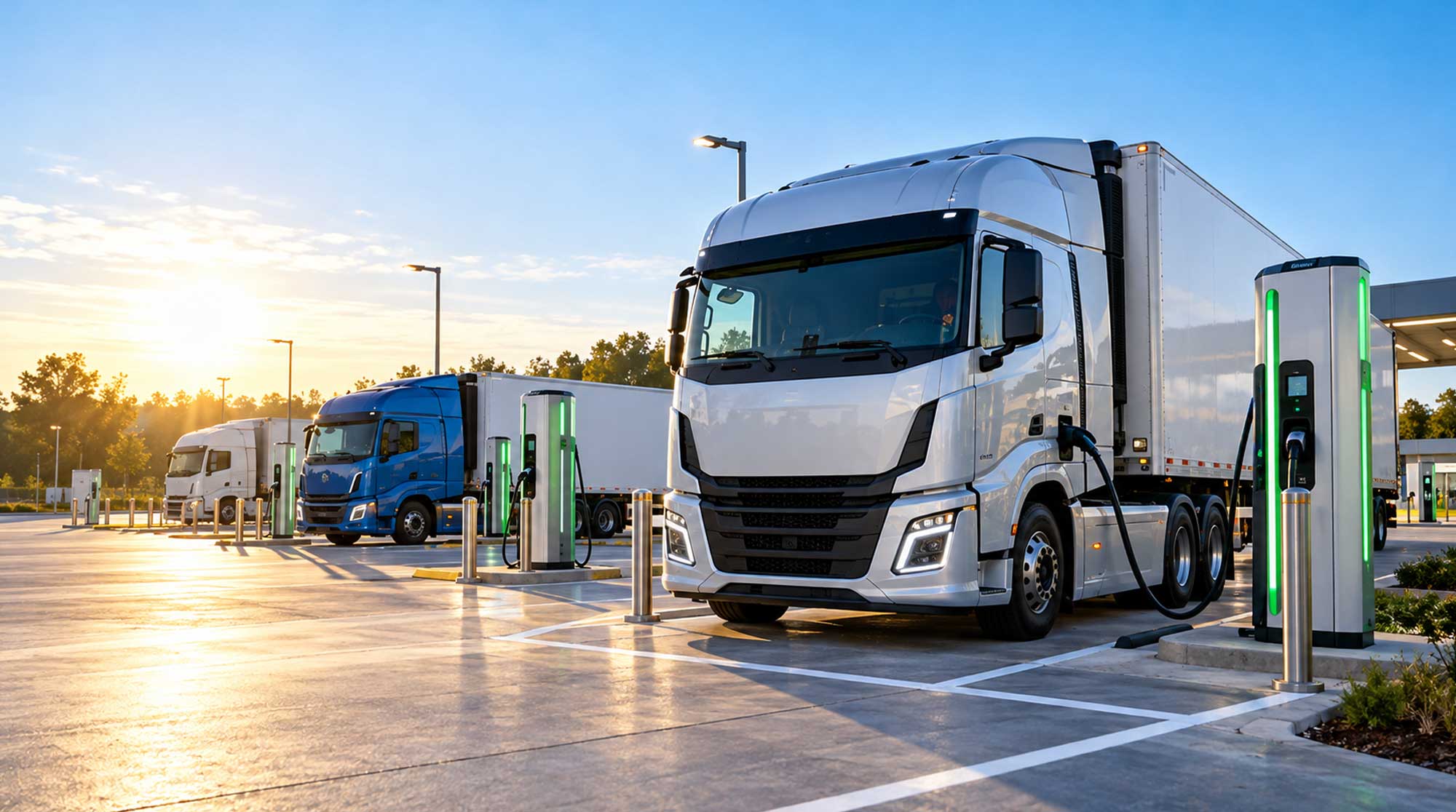
When Time Becomes the Most Expensive Fuel
A delivery truck arrives at a distribution centre to unload its cargo. By the time the paperwork is complete and the next consignment is loaded, the vehicle has already gained enough charge to continue its journey. No lengthy charging stop. No disruption to deliveries. No compromise on productivity.
This is the promise of flash charging.
"In commercial mobility, every minute a vehicle stands still is a minute it stops creating value."
-An emBRWace Editorial Reflection
Unlike passenger vehicles, commercial fleets cannot afford extended charging interruptions. Every hour spent connected to a charger reduces vehicle utilisation, affects delivery schedules and influences profitability. As fleet operators transition towards zero-emission transport, the challenge is no longer simply replacing diesel with electricity—it is ensuring that electric vehicles remain as productive as the assets they replace.
Why Flash Charging Matters
Flash charging delivers ultra-high-power direct current (DC) electricity—typically between 500 kW and more than 1 MW—allowing commercial vehicles to recover substantial driving range in as little as five to fifteen minutes under suitable conditions.
Rather than fully recharging a battery, the objective is to add sufficient energy during planned operational pauses. A truck can recharge while goods are unloaded, an electric bus during scheduled layovers, and a long-haul vehicle while the driver takes a mandatory rest break.
By integrating charging into existing workflows, fleets spend less time waiting and more time moving.
The Technology Behind the Speed
Delivering electricity at such high power requires more than faster chargers. Flash charging relies on an integrated system comprising high-voltage battery architectures, intelligent battery management systems, advanced thermal management, liquid-cooled charging cables and sophisticated power electronics.
At the same time, battery technologies continue to evolve. New chemistries, including lithium iron phosphate (LFP), silicon-enhanced anodes and emerging solid-state batteries, are being developed to withstand repeated ultra-fast charging while preserving long-term performance.
The result is a charging ecosystem designed not merely for speed, but for safe, reliable and efficient commercial operation.
The Economics of Every Minute
The greatest value of flash charging lies not in charging faster, but in working smarter.
Higher vehicle availability enables fleets to complete more deliveries, operate longer routes and improve asset utilisation without increasing fleet size. Frequent rapid top-ups can also reduce dependence on oversized battery packs, lowering vehicle weight and potentially reducing acquisition costs.
For urban bus operators, strategically positioned flash charging stations allow smaller batteries to support continuous daily operation, improving passenger capacity while reducing battery costs and demand for critical minerals.
In long-haul freight, megawatt charging systems are beginning to align charging sessions with mandatory driver rest periods. Instead of extending journey times, charging becomes part of the normal operating schedule—a development that could significantly improve the commercial viability of battery-electric heavy trucks.
For fleet operators, the real return on investment is measured not only in kilowatts, but in greater productivity per vehicle.
Engineering Challenges
Flash charging also introduces important technical and infrastructure challenges.
Charging at megawatt power levels generates considerable heat, making advanced thermal management essential for protecting battery health. At the infrastructure level, a single megawatt charger can consume as much electricity as hundreds of homes, requiring substantial grid capacity and electrical upgrades.
To reduce pressure on local networks, many charging facilities are expected to incorporate stationary energy storage systems that store electricity during off-peak periods before delivering high-power charging when vehicles arrive.
These challenges are significant, but continued advances in battery technology, power electronics and smart energy management are steadily making ultra-fast commercial charging more practical.
The emBRWace Perspective
Flash charging should not be viewed simply as a faster way to recharge batteries. It represents a new operating model for commercial mobility.
As charging increasingly takes place during routine business activities rather than dedicated downtime, fleet electrification becomes less about adapting operations to vehicles and more about designing vehicles to fit seamlessly into operations.
For commercial transport, this shift could prove as important as the transition from diesel to electricity itself. The organisations that gain the greatest advantage will be those that integrate charging strategy, route planning, energy management and fleet operations into one intelligent ecosystem.
Thought to Take Away
The first generation of electric commercial vehicles proved that cleaner transport is possible. The next generation must prove that it can be equally productive. Flash charging may ultimately be remembered not because it delivers electricity faster, but because it keeps businesses moving.
emBRWace Explains [FAQ]
Key questions answered.
1. What is flash charging, and how is it different from conventional fast charging?
Flash charging uses ultra-high-power DC electricity—typically from 500 kW to more than 1 MW—to add significant driving range in just a few minutes. Unlike conventional fast charging, which often takes 30–90 minutes, flash charging is designed to fit within routine operational breaks, keeping commercial vehicles productive throughout the day.
2. Will frequent flash charging damage commercial EV batteries?
Modern battery management systems continuously regulate charging speed, temperature and cell balancing to minimise battery degradation. As battery chemistries such as LFP and future solid-state technologies mature, the impact of repeated ultra-fast charging is expected to reduce further.
3. Which commercial vehicles stand to benefit the most from flash charging?
Vehicles operating intensive daily schedules—such as urban buses, long-haul trucks, delivery fleets, airport shuttles, port logistics vehicles and refuse collection trucks—are likely to benefit the most, as they can recharge during planned operational pauses instead of remaining idle for extended periods.
4. Why is flash charging considered a business advantage rather than just a technological improvement?
The biggest benefit is increased fleet productivity. By reducing charging downtime, operators can improve vehicle utilisation, maintain delivery schedules, optimise routes and generate greater returns from existing fleet assets without necessarily increasing fleet size.
5. What are the biggest challenges to widespread adoption of flash charging?
The main barriers include the high cost of ultra-fast charging infrastructure, increased electricity demand, the need for stronger grid connections and advanced thermal management for batteries. However, ongoing advances in charging technology, battery design and smart energy management are steadily making flash charging more commercially viable.
Continue the Journey
DEEP DIVE | Executive Intelligence
Brief No. 002
The Economics of Megawatt Charging