When the Future Doesn't Arrive All at Once
For years, the future of freight seemed destined to belong to batteries and hydrogen. Yet while those technologies continue to dominate headlines, another solution has quietly been gathering momentum using engines the industry already understands. Flex fuel may never become the most celebrated innovation in commercial transport—but it could become one of the fastest ways to reduce emissions across today's global truck fleet.The reality is that heavy commercial vehicles present one of transport's toughest decarbonisation challenges. Long-haul operations demand range, payload and rapid refuelling—requirements that remain difficult for many zero-emission technologies to meet consistently. That has created renewed interest in flex fuel systems capable of operating on high-ethanol blends such as ED95 and E85 while retaining the familiarity of internal combustion engines.
Why This Matters
- Freight decarbonisation requires practical transition technologies—not just long-term ambitions.
- Flex fuel allows operators to reduce emissions while leveraging existing vehicle architectures and maintenance ecosystems.
- Nations with strong agricultural sectors could strengthen both energy security and transport sustainability through domestic biofuel production.
More Than an Alternative Fuel
Unlike battery-electric or hydrogen-powered trucks, flex fuel vehicles do not require fleet operators to completely rethink how vehicles are purchased, maintained or operated. They provide an incremental pathway towards lower lifecycle emissions using technology already proven in commercial applications.
Brazil remains the global benchmark, combining decades of ethanol policy with an extensive sugarcane industry and mature fuelling infrastructure. India is expanding ethanol blending programmes to improve energy security, while Europe increasingly regards renewable fuels as an essential bridge for sectors where electrification remains difficult. Across North America, bioethanol is also attracting interest in specialist applications including agriculture, mining and heavy industry.
The appeal is not simply environmental. It is operational.
A Multi-Energy Future
Flex fuel is unlikely to become the universal answer to freight decarbonisation. Infrastructure gaps, feedstock availability and policy uncertainty continue to limit wider adoption, while rapid advances in battery-electric and hydrogen technologies will shape future investment decisions.
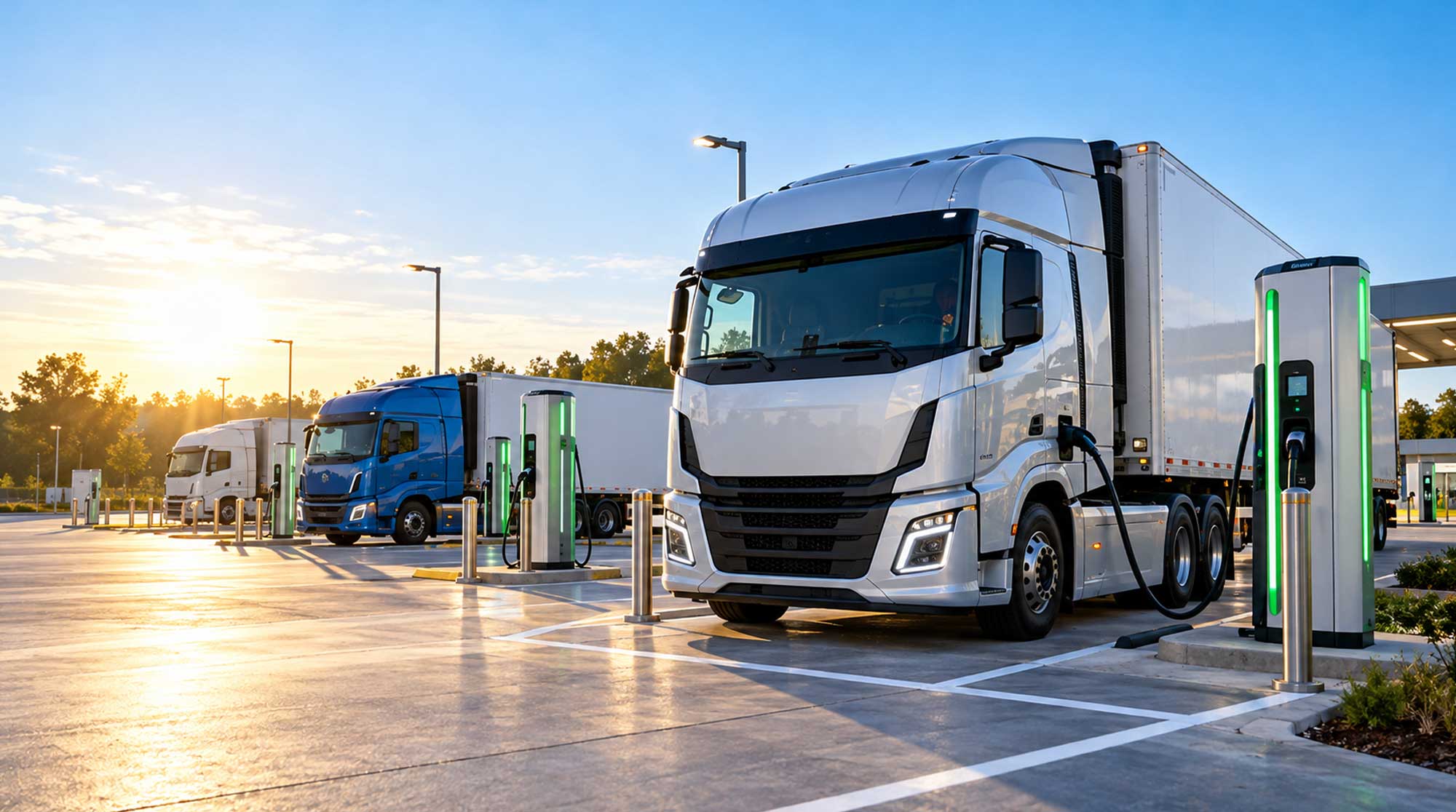
Yet the industry's direction is becoming increasingly clear. Rather than replacing diesel with a single technology, commercial transport is evolving towards a diversified energy ecosystem. Battery-electric trucks will suit urban distribution. Hydrogen may serve long-haul freight. Renewable diesel and bio-LNG will expand in selected markets. Flex fuel can provide an immediate and practical bridge for operators seeking lower emissions without waiting for entirely new infrastructure.
The emBRWace Perspective
Perhaps the biggest misconception surrounding freight decarbonisation is the belief that one technology will eventually dominate them all.
History suggests otherwise.
The commercial vehicle industry has always evolved by adding solutions, not replacing them overnight. Flex fuel may never become the headline act, but it represents something equally important: a reminder that progress often comes through practical evolution rather than technological revolution.
For fleet operators, policymakers and manufacturers alike, the question is no longer which technology will win.
It is how intelligently they can work together.
emBRWace Explains (FAQ]
Key questions answered.
What is flex fuel technology in heavy commercial vehicles?
Flex fuel technology enables heavy commercial vehicles to operate on varying blends of bioethanol and conventional fuels, including high-ethanol fuels such as ED95 and E85. It offers fleet operators a practical pathway to lower lifecycle carbon emissions while retaining the familiarity of internal combustion engine technology.
Why is flex fuel considered a transition technology?
Unlike battery-electric or hydrogen-powered trucks, flex fuel vehicles can utilise existing vehicle platforms, maintenance practices and much of today's fuelling ecosystem. This makes them an attractive bridge between conventional diesel transport and the next generation of low-carbon mobility solutions.
Which countries are leading the adoption of flex fuel for freight?
Brazil remains the global leader due to its mature bioethanol industry, extensive sugarcane production and well-established fuelling infrastructure. India is rapidly expanding ethanol blending programmes, while several European countries are encouraging renewable fuels to support freight decarbonisation. North America is also exploring flex fuel in specialised commercial applications.
Can flex fuel replace diesel completely?
Not entirely. Flex fuel is best viewed as one component of a broader multi-energy strategy for commercial transport. Depending on operating conditions, battery-electric trucks, hydrogen fuel cells, renewable diesel, bio-LNG and flex fuel are all expected to play complementary roles in reducing freight emissions.
What are the biggest challenges facing flex fuel adoption?
The primary barriers include limited high-ethanol fuelling infrastructure, fluctuations in agricultural feedstock availability, ethanol's lower energy density compared with diesel and the need for long-term policy support to encourage investment in production and distribution.
Why is flex fuel important for emerging economies?
Countries with strong agricultural sectors can produce bioethanol domestically, reducing dependence on imported fossil fuels while creating new economic opportunities for farmers, biofuel producers and rural industries. This strengthens both energy security and environmental sustainability.
Is flex fuel better than battery-electric or hydrogen trucks?
Each technology addresses different operational needs. Battery-electric trucks are well suited to urban distribution, hydrogen shows strong potential for long-haul freight, while flex fuel offers an immediately deployable solution for reducing emissions using existing vehicle technology. The future of freight is expected to rely on a combination of these technologies rather than a single winner.
What does the future hold for flex fuel commercial vehicles?
As governments strengthen emissions regulations and fleet operators seek practical decarbonisation pathways, flex fuel is expected to play an increasingly important role—particularly in regions with strong bioethanol production and limited charging or hydrogen infrastructure. Rather than replacing other alternative fuels, it is likely to become an important part of a diversified, lower-carbon freight ecosystem.