Read Time: 1 Minute
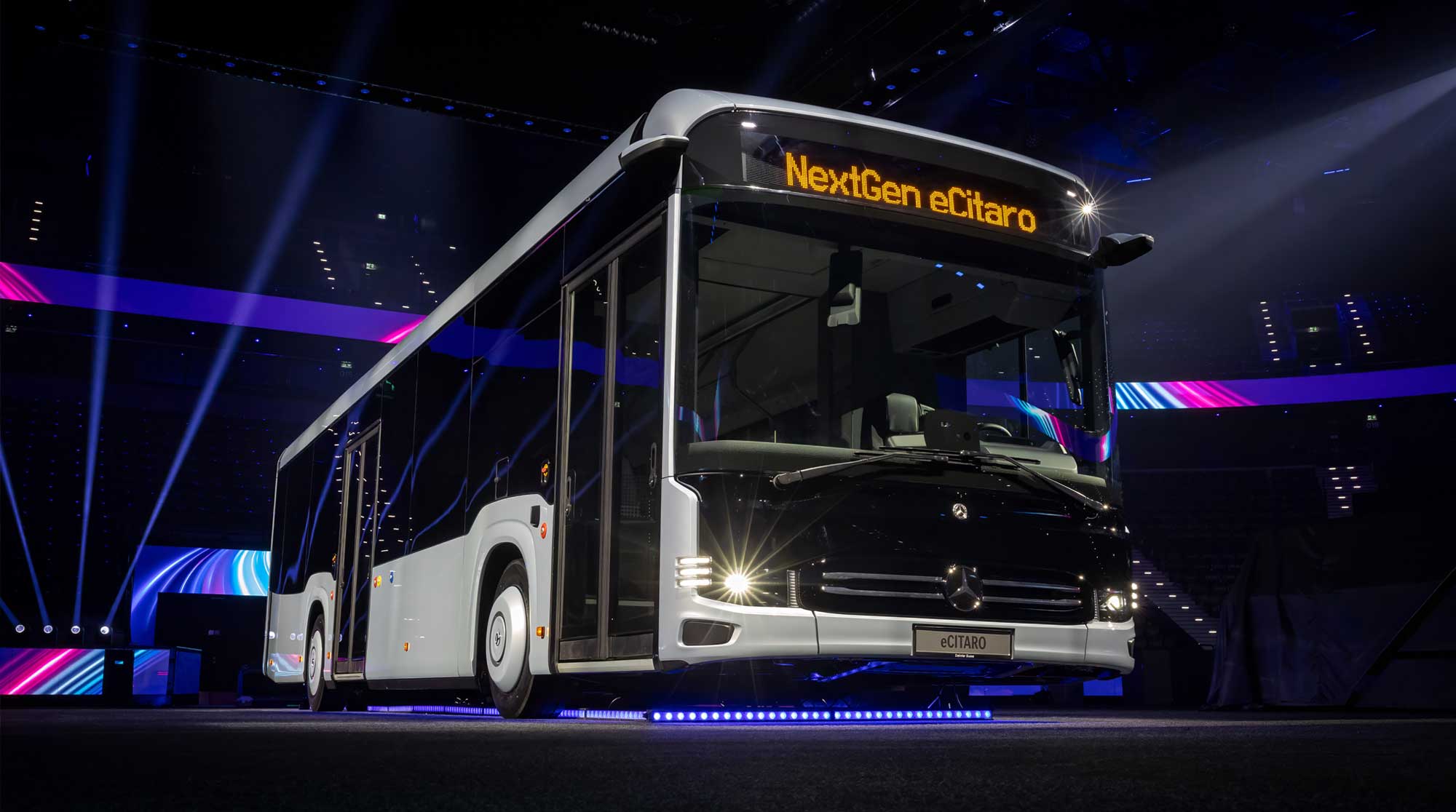
Daimler Buses has unveiled the near-production prototype of the next-generation Mercedes-Benz eCitaro, introducing an entirely new vehicle platform developed specifically for battery-electric operation.
Presented at the company's eMobility Days 3.0 in Munich on 10 November 2026, the new generation marks a significant departure from the current eCitaro, which is based on a platform originally designed for conventional diesel propulsion.
The redesigned architecture will accommodate seven vehicle configurations, from 10-metre solo buses to 18-metre articulated models. It introduces lithium iron phosphate (LFP) battery technology, with modular packs of approximately 50 kWh each, allowing capacity to be tailored to vehicle size and operating requirements. The new platform also reduces the articulated bus's unladen weight by approximately 750 kilograms, creating scope for increased passenger capacity. Its electronic architecture supports over-the-air software updates and future digital functions.
Daimler Buses will continue developing and producing the vehicle in Europe, with development led by Mannheim and manufacturing planned in Germany, France and the Czech Republic. The official world premiere is scheduled for October 2027 at Busworld Europe in Brussels, with market launch planned for 2028.
Why It Matters
By developing its next-generation city bus specifically around electric propulsion, Daimler Buses is targeting greater efficiency, passenger capacity and operational flexibility. The project also reinforces Europe's role in developing and manufacturing next-generation electric public transport vehicles.