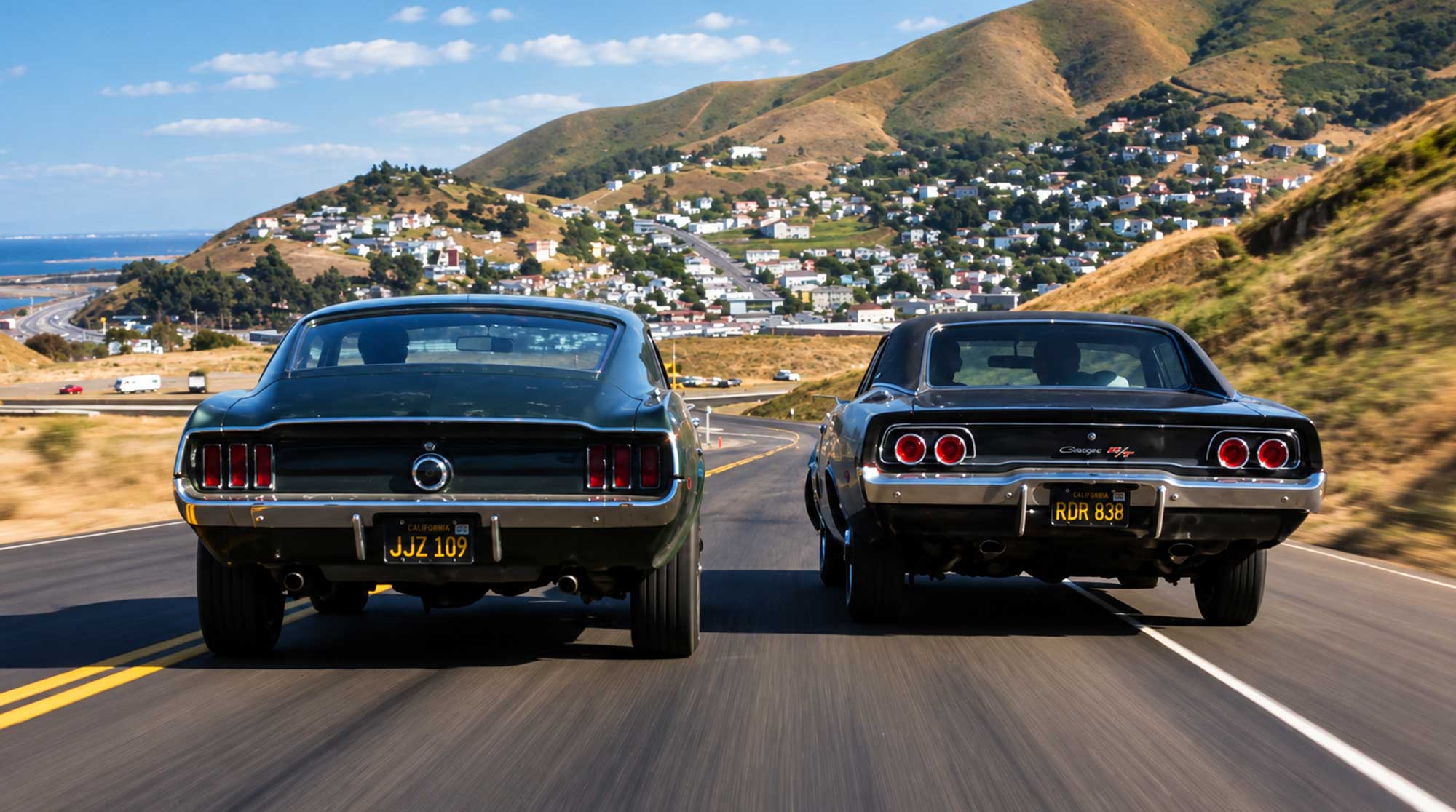
On 17 October 1968, Bullitt opened at New York’s Radio City Music Hall, introducing audiences to a car chase that would redefine action filmmaking. Directed by Peter Yates and starring Steve McQueen as San Francisco police lieutenant Frank Bullitt, the thriller transformed two American muscle cars into enduring cinematic icons.
Ten Minutes of Adrenaline
At the heart of the film was an extraordinary pursuit through San Francisco’s steep streets and surrounding roads. Behind the wheel of a Highland Green 1968 Ford Mustang GT 390 Fastback, McQueen’s character pursued a menacing black 1968 Dodge Charger R/T 440.
For nearly eleven minutes, the sequence delivered something unusually visceral. There was no musical score during the chase. Instead, roaring V8 engines, screeching tyres and aggressive gear changes supplied the drama.
The cars leapt over hills, attacked corners and thundered through city streets. Rather than relying on accelerated footage to simulate speed, the filmmakers used real driving, carefully planned stunts and dynamic camera positioning to create a powerful sense of danger.
Real Cars. Real Stunts.
McQueen, an accomplished driving enthusiast, performed some of the driving himself. The more hazardous manoeuvres involved professional stunt drivers, including Bud Ekins and Carey Loftin, while Bill Hickman drove the Charger.
Filming the pursuit took approximately three weeks. Its seemingly continuous route was actually assembled from multiple locations through meticulous editing.
That craftsmanship earned Frank P. Keller the Academy Award for Best Film Editing in 1969.
A Chase that Never Ended
The sequence established a benchmark for automotive action, influencing generations of filmmakers who sought to reproduce its realism, tension and mechanical intensity.
It also elevated the Mustang GT Fastback into a screen legend, while the Charger became an equally memorable adversary.
More than half a century later, Bullitt remains proof that cinematic excitement does not always require elaborate effects. Sometimes, two powerful machines, skilful drivers and an unforgiving stretch of road are enough to create movie history.