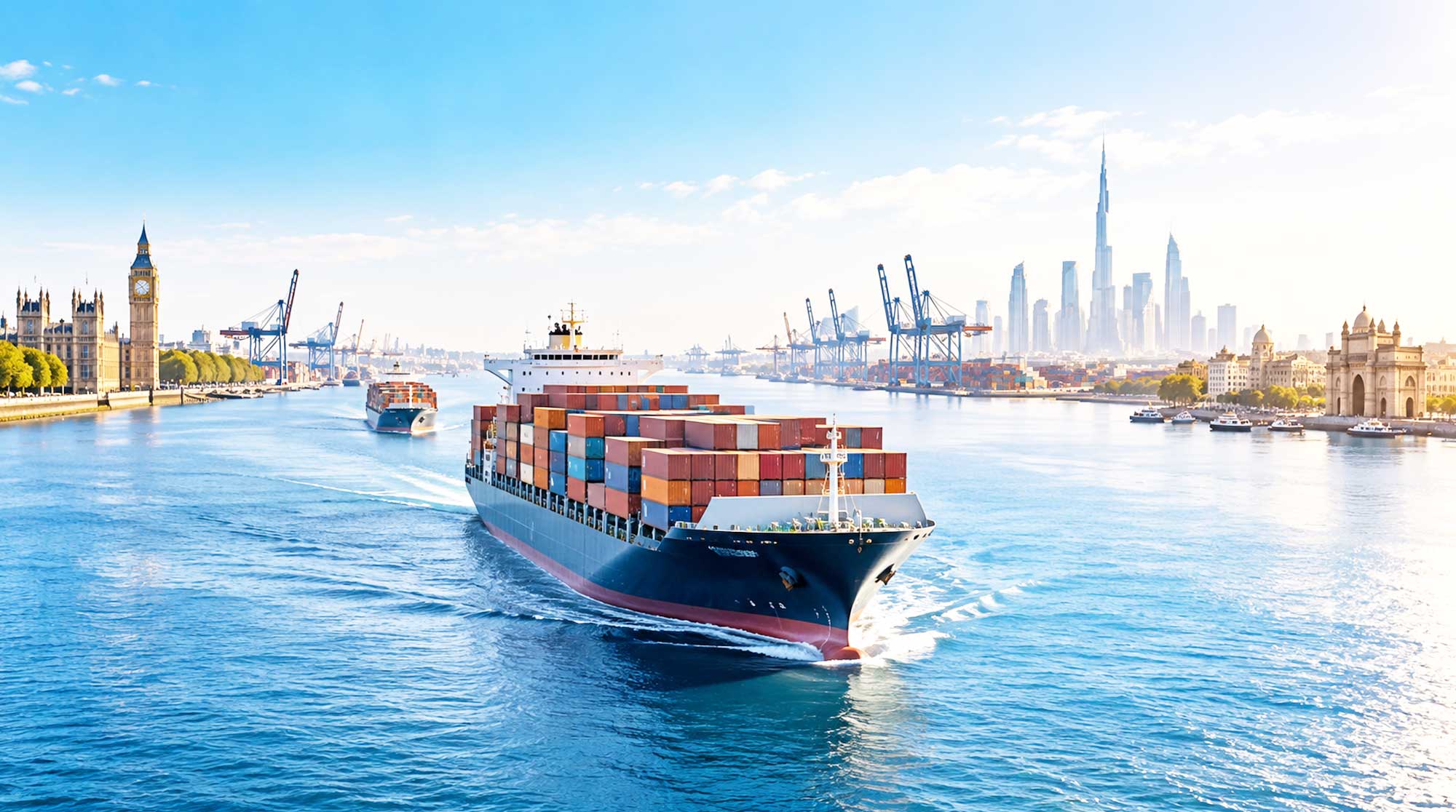
The recovery of shipping activity across the Middle East is yet to translate into normal freight conditions. Europa Air & Sea warns that disrupted routes, changing schedules and limited capacity continue to drive up costs, particularly for shipments from the UAE to the UK, with knock-on effects reaching Indian businesses.
The warning comes as trade links between the UK and India gain further momentum. Goods trade between the two countries reached £17.3 billion in the four quarters to the end of the first quarter of 2026, according to figures cited by Europa.
For exporters and importers, the challenge is increasingly about managing uncertainty across interconnected trade lanes. Europa advises businesses to engage freight partners early, check available capacity and build flexibility into shipment planning.
Sea freight remains suited to larger consignments where cost takes priority over speed, while air freight offers an alternative for urgent, high-value or time-sensitive cargo. Shipment visibility, alternative routing and local market knowledge are also becoming more important as conditions change.
Why It Matters:
Disruption in the Gulf can affect supply chains thousands of miles away. For businesses across the UK, UAE and India, freight planning is becoming a strategic decision involving cost, timing, capacity and resilience—not simply the choice of transport mode.