Reading Time: 4 Minutes
WHY THIS MATTERS
- Long-haul freight needs zero-emission solutions that preserve operational productivity, particularly where range and rapid turnaround are critical.
- The NextGenH2 uses liquid hydrogen as its onboard energy source, converting it into electricity through fuel cells rather than burning it in an internal-combustion engine.
- Its propulsion system combines two cellcentric BZA150 fuel-cell units producing around 300 kW of continuous system output with a 101 kWh LFP buffer battery.
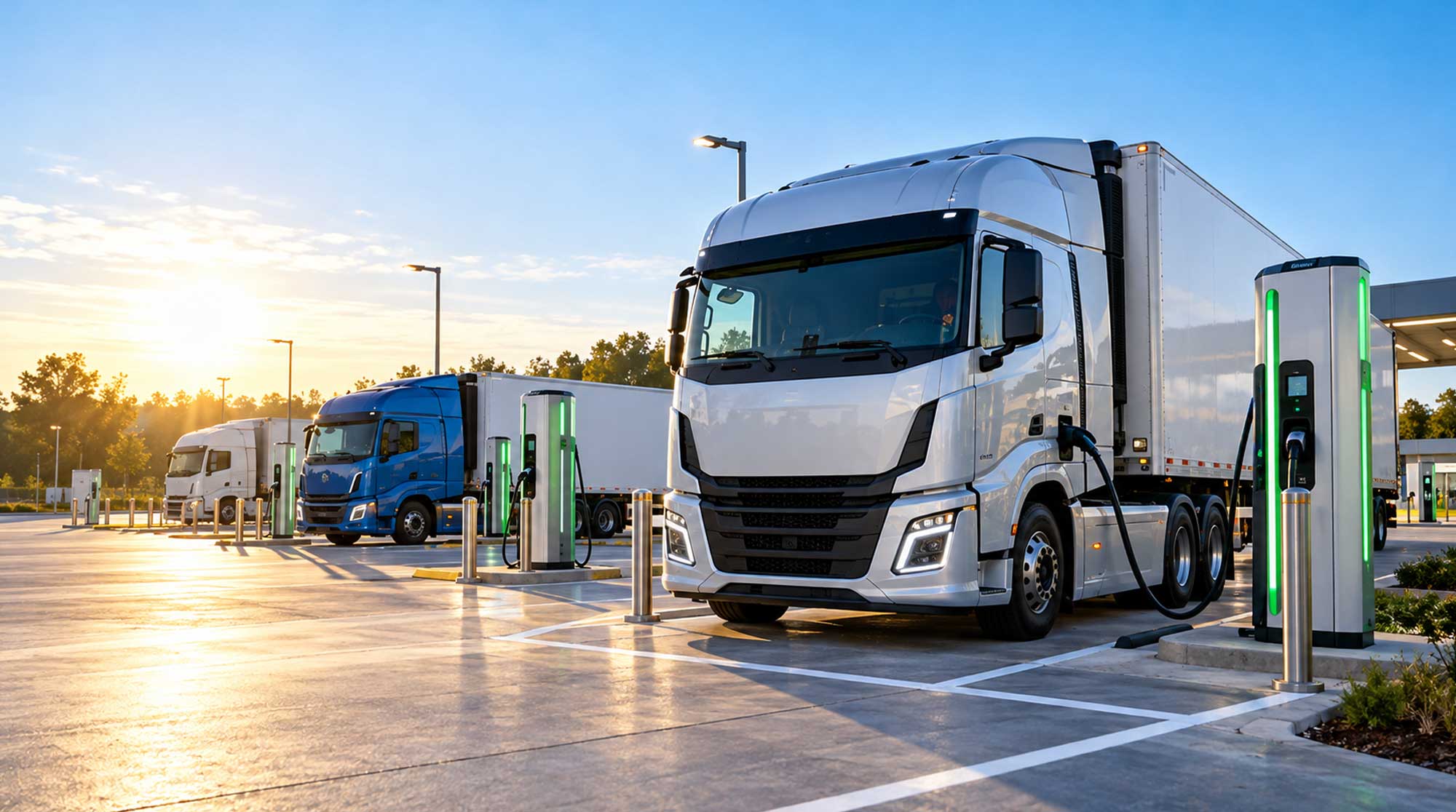
- Liquid-hydrogen refuelling using the sLH₂ standard is reported at 10–15 minutes, potentially bringing turnaround closer to conventional long-haul operations.
- Mercedes-Benz Trucks plans to build 100 vehicles in a small series from the end of 2026, using customer operations to gather real-world data on maintenance, refuelling logistics and fleet integration.
The future of zero-emission freight is unlikely to be defined by a single powertrain. Battery-electric trucks are already establishing their role in applications where charging can be integrated into daily operations. Long-distance heavy haulage presents a different equation: high payloads, extended driving distances, tight schedules and the need to minimise downtime.
The Mercedes-Benz NextGenH2 is designed around that challenge. Instead of storing its primary energy directly in a very large traction battery, the truck carries liquid hydrogen, converts it into electricity through fuel cells and uses that electricity to power an electric drivetrain. The wheels are driven electrically. Hydrogen is the onboard energy carrier. That distinction is central to understanding the vehicle.
ELECTRIC DRIVE, HYDROGEN ENERGY
At the heart of the NextGenH2 are two cellcentric BZA150 fuel-cell units, delivering around 300 kW of continuous system output. Hydrogen reacts with oxygen inside the fuel cells to generate electricity, with water vapour as the direct emission from the electrochemical process. A 101 kWh lithium-iron-phosphate (LFP) buffer battery complements the fuel-cell system. It stores energy recovered during braking and downhill driving and supports transient power demands, helping smooth variations in the drivetrain's energy requirements.
The result is a fully electric drive system — but one whose primary onboard energy carrier is hydrogen rather than a large traction battery.
LIQUID HYDROGEN CHANGES THE EQUATION
Hydrogen can be stored in gaseous or liquid form. The NextGenH2 takes the cryogenic route, storing hydrogen at approximately −253°C. The liquid state enables greater volumetric energy density than compressed gaseous hydrogen, allowing the truck to carry up to 85 kg of liquid hydrogen in two tanks. Range is where the proposition becomes particularly interesting for heavy haulage.
The previous GenH2 prototype has demonstrated distances well in excess of 1,000 km on a single fill under full-load conditions, according to the source material. The NextGenH2 is being developed around the same fundamental long-haul requirement: substantial range without imposing extended charging stops. Refuelling with liquid hydrogen using the sLH₂ standard is reported to take approximately 10–15 minutes.
ELECTRIC PERFORMANCE
Hydrogen may provide the energy, but the driving experience is electric. The NextGenH2's electric drivetrain delivers immediate torque, supporting smooth acceleration and strong hill-climbing performance under heavy loads. The truck offers Economy and Power drive modes, allowing the operating emphasis to shift between efficiency and performance according to route and load requirements.
The electric drivetrain also contributes to reduced noise and vibration, an advantage for drivers spending long periods behind the wheel.
That creates an interesting combination:
- Hydrogen energy.
- Electric propulsion.
- Heavy-haul performance.
PACKAGING THE TECHNOLOGY
A hydrogen powertrain introduces significant packaging demands. Mercedes-Benz Trucks addresses this through a redesigned Tech Tower behind the cab, which houses key hydrogen-handling and thermal-management systems within a compact footprint. The arrangement supports a 4,000 mm wheelbase and compatibility with standard trailer configurations within EU length regulations.
The vehicle also carries over elements from Mercedes-Benz Trucks' existing electric architecture, including the integrated e-axle, ProCabin and Multimedia Cockpit Interactive 2. This approach is significant.
The NextGenH2 is not an entirely new truck concept. It integrates a fundamentally different energy system into an increasingly familiar electric-vehicle architecture.
SAFETY MEETS CRYOGENICS
Hydrogen brings its own engineering and safety requirements. The NextGenH2 incorporates boil-off and leak-detection technologies to monitor the cryogenic hydrogen system. Its road-safety package includes Active Brake Assist 6, Front Guard Assist and Active Sideguard Assist 2.
The vehicle also incorporates practical packaging and accommodation features intended for long-haul use, including a two-bed cab configuration. The message is clear: introducing hydrogen does not remove the requirements of conventional truck usability. The new energy system has to work within them.
THE REAL TEST BEGINS
The most consequential stage of the NextGenH2 programme is still ahead. Mercedes-Benz Trucks plans to begin small-series production of 100 vehicles at its Wörth plant in Germany from the end of 2026. Selected customers will operate the trucks to generate real-world data and refine maintenance, refuelling logistics and fleet-integration processes ahead of broader series production.
This is where engineering becomes evidence. Customer operations will begin answering questions that laboratory testing cannot fully resolve:
- How will the vehicle perform across different routes?
- How will fleets integrate hydrogen refuelling into daily operations?
- What will maintenance look like?
- How will total cost of ownership compare with competing technologies?
And ultimately:
- Can hydrogen deliver the reliability and productivity that long-haul freight demands?
THE INFRASTRUCTURE QUESTION
The truck may be ready before the ecosystem is.
The bigger challenge may lie beyond the vehicle itself. Widespread adoption of fuel-cell trucks will depend on the availability of renewable hydrogen, cost-competitive fuel and a sufficiently developed refuelling network. Without that ecosystem, hydrogen heavy-haulage could initially remain concentrated along specialised corridors or within early-adopter fleets.
A hydrogen truck cannot operate in isolation. The vehicle, the fuel the refuelling network, the energy source, the fleet, the economics… All have to work together.
MOBILITY ANSWERS
1.Is the NextGenH2 a battery-electric truck?
It is an electric-drive truck, but its primary onboard energy source is liquid hydrogen. Fuel cells convert hydrogen into electricity, while a 101 kWh LFP battery provides energy buffering and stores recovered energy.
2.Why use liquid hydrogen?
The NextGenH2 stores hydrogen in cryogenic liquid form at approximately −253°C. The liquid state offers greater volumetric energy density than compressed gaseous hydrogen, allowing up to 85 kg of hydrogen to be carried in two tanks.
3.Has the NextGenH2 itself demonstrated more than 1,000 km?
The source attributes the well-over-1,000-km full-load demonstration to previous GenH2 prototype programmes. The NextGenH2 is the next development step and will undergo customer-operated validation through its planned small series.
4.How quickly can it be refuelled?
The source reports approximately 10–15 minutes for liquid-hydrogen refuelling using the sLH₂ standard.
5.What does the buffer battery do?
The 101 kWh LFP battery stores energy recovered during braking and downhill driving and helps smooth transient power demands within the electric drivetrain.
6.When will customer trials begin?
Mercedes-Benz Trucks plans a 100-unit small series from the end of 2026, with selected customers operating the vehicles to generate real-world data on maintenance, refuelling logistics and fleet integration.
7.What could limit wider adoption?
The source highlights the scarcity of green-hydrogen infrastructure and the need for cost-competitive renewable hydrogen refuelling. Fleet operators will also need to assess total cost of ownership, residual values, maintenance and driver-training requirements against competing technologies.
BY THE NUMBERS
85 kg
Maximum liquid-hydrogen capacity cited for the NextGenH2.
>1,000 km
Distance demonstrated by the previous GenH2 prototype under full-load conditions.
10–15 minutes
Reported liquid-hydrogen refuelling time using the sLH₂ standard.
300 kW
Combined continuous output of the two BZA150 fuel-cell units.
101 kWh
Capacity of the LFP buffer battery.
100
Vehicles planned for the initial small series from the end of 2026.
DEEP DIVE Perspective
The Mercedes-Benz NextGenH2 presents a carefully engineered proposition for one of road transport's most difficult decarbonisation challenges.
Its combination of liquid hydrogen, fuel-cell electric propulsion, substantial energy storage, rapid refuelling and familiar heavy-truck architecture addresses several of the operational demands associated with long-haul freight. But the decisive evidence will come from the road.
The planned 100-unit small series will provide an important opportunity to assess maintenance, refuelling logistics and fleet integration under real operating conditions. Meanwhile, the availability and cost of renewable hydrogen infrastructure remain critical variables. The NextGenH2 may demonstrate that the truck can work. The ecosystem will determine whether the solution can scale.
THOUGHT TO TAKE AWAY
The future of long-haul trucking will not be decided by the cleanest technology on paper, but by the technology that can make sustainability work on the road.
NEXT CV REVIEW
Coming Soon
The next generation of commercial vehicles is being shaped not by one powertrain, but by a contest of technologies, economics and real-world operating conditions.
CV Review continues…