On 5 November 1895, American patent attorney and inventor George B. Selden received US Patent No. 549,160 for a design he called a Road-Engine. But the real significance of this patent lay beyond its engineering concept. Filed more than 16 years earlier, it would eventually become the basis of a legal battle that challenged the freedom of America's emerging automobile manufacturers. At its heart was a contentious question: could one inventor claim control over an entire industry through a patent for a vehicle that had never entered commercial production?
An Idea Filed Before Its Time
Selden's original patent application had been submitted on 8 May 1879, when practical petrol-powered automobiles were still far from becoming an established industry. His proposed vehicle combined an internal-combustion engine with a carriage-style chassis, aiming to create a road locomotive that was lighter and more manageable than contemporary steam-powered alternatives.
The application remained pending for more than 16 years. During that period, developments in motor engineering and the emergence of independent automobile manufacturers transformed the commercial landscape. When the patent was finally granted in 1895, Selden held rights over a concept that had become increasingly relevant to a rapidly developing industry.
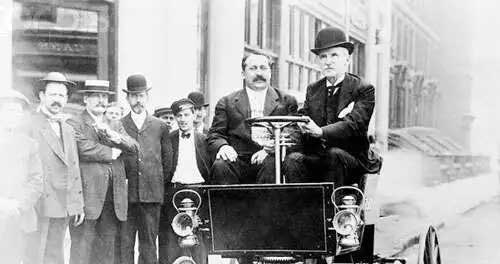
Yet Selden had not turned his original design into a commercially successful automobile. Instead, the patent became a valuable commercial asset. In 1899, its rights were transferred to interests associated with the Electric Vehicle Company, and a group of manufacturers subsequently organised the Association of Licensed Automobile Manufacturers to administer licences and royalties.
Henry Ford Takes on the Patent
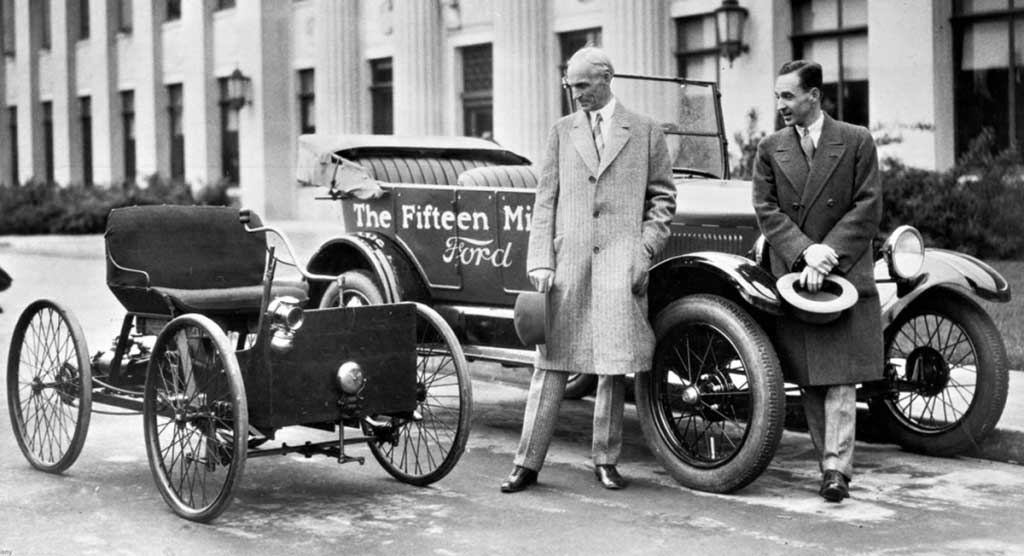
The patent's reach soon provoked resistance. Among its most prominent challengers was Henry Ford, whose company refused to accept the licensing arrangement. In 1903, the Selden interests initiated legal action against Ford, setting the stage for one of the most consequential patent disputes in early American automotive history.
The case raised a fundamental question: could a patent based on an earlier proposed design claim control over an entire emerging industry, even when manufacturers were developing vehicles using different engineering principles?
The legal battle continued for years. In 1911, an appellate court upheld the patent's validity but interpreted its scope narrowly, restricting it to vehicles using the Brayton-type engine specified in Selden's application. Ford's vehicles used the Otto-cycle engine, and therefore did not infringe the patent under that interpretation.
The decision weakened the patent's influence and marked a significant victory for independent automobile manufacturers. It also demonstrated the importance of distinguishing between an early patent claim and the specific technology used in a working vehicle.
Selden's legacy lies not in having single-handedly invented the automobile, but in the extraordinary legal and commercial consequences of his patent. His case exposed the tensions between invention, intellectual property and industrial competition at a formative moment in automotive history.