Read Time: 4 Minutes
The youngest Formula 1 world champion in history is more than a record-breaker. Kimi Antonelli represents a generational shift that could redefine Grand Prix racing for years to come.
For years, Formula 1 has been defined by legendary names. Lewis Hamilton, Max Verstappen, Fernando Alonso and Sebastian Vettel have dominated headlines, championships and record books. Yet every era in motorsport eventually reaches a turning point.
That moment may have arrived in 2026.
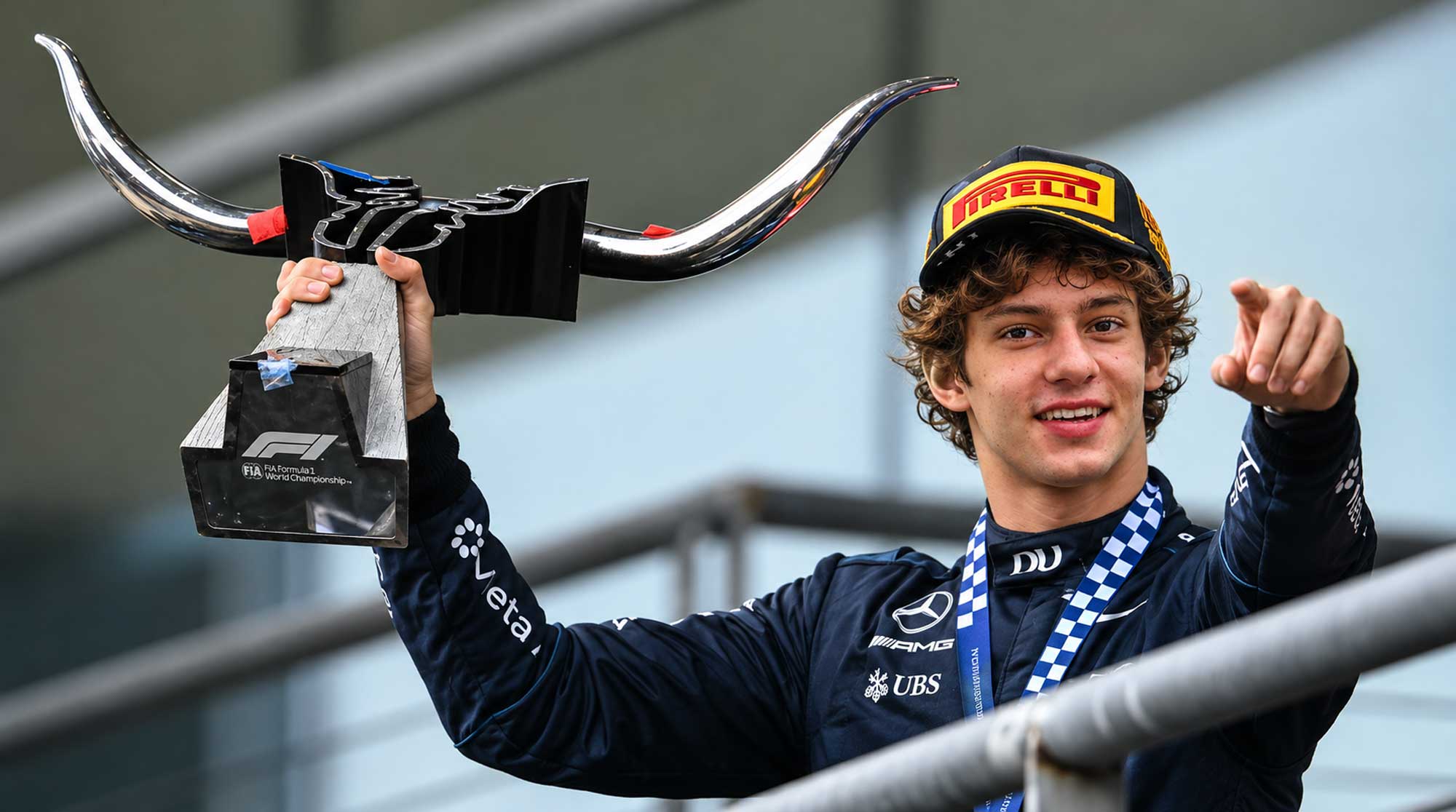
When Kimi Antonelli clinched the Formula 1 World Championship at the Mexico City Grand Prix, the Mercedes driver did more than secure his first title. At just 20 years old, he became the youngest world champion in Formula 1 history, signalling the beginning of a new chapter for the sport.
More importantly, Antonelli's success represents a wider generational shift. A talented group of young drivers is emerging across the grid, and together they are reshaping the future of Grand Prix racing.
Kimi Antonelli's Rapid Rise to Formula 1 Glory
Few drivers have progressed through the junior ranks as quickly as Andrea Kimi Antonelli.
Born in Bologna, Italy, in 2006, Antonelli began karting at the age of seven before joining Mercedes' junior programme in 2019. What followed was a remarkable climb through the motorsport ladder.
He won both the Italian and German Formula 4 championships in 2022 before adding Formula Regional titles in 2023. In a move that underlined Mercedes' faith in his ability, Antonelli jumped directly into Formula 2 in 2024, bypassing Formula 3 entirely.
His transition to Formula 1 came quickly after Lewis Hamilton's move to Ferrari ahead of the 2025 season. Despite the pressure of replacing a seven-time world champion, Antonelli impressed immediately, scoring multiple podium finishes during his rookie campaign.
By 2026, he had taken another step forward.
Nine victories, seven pole positions and remarkable consistency throughout the season helped Antonelli secure the Drivers' Championship and establish himself as Formula 1's newest superstar.
A New Generation of Formula 1 Talent
While Antonelli's title-winning season has captured global attention, he is far from the only young driver making an impact.
The Formula 1 grid is packed with emerging talent, creating one of the most exciting periods of transition the sport has seen in decades.
Oscar Piastri: The Complete Challenger
McLaren's Oscar Piastri has built a reputation as one of Formula 1's most intelligent and composed racers.
The Australian combines excellent race management with strong technical understanding, qualities that have made him a consistent front-runner. His ability to maximize opportunities has already established him as a serious championship contender.
Lando Norris: The Benchmark
At 26, Lando Norris occupies a unique position within Formula 1.
He remains part of the younger generation while already possessing the experience of an established champion. Norris has become a benchmark for the sport's next wave of talent, combining qualifying speed, racecraft and consistency at the highest level.
The Next Wave
Behind Antonelli, Norris and Piastri, several promising names are continuing their development.
Isack Hadjar's aggressive racing style has earned him a place among Red Bull's leading prospects. Oliver Bearman continues to showcase impressive maturity at Haas, while Arvid Lindblad represents one of Formula 1's youngest and most exciting newcomers. Meanwhile, Audi's Gabriel Bortoleto arrives with Formula 3 and Formula 2 titles already on his résumé, hoping to translate junior success into Formula 1 results.
Together, these drivers form the foundation of Formula 1's future.
Why This Formula 1 Generational Shift Matters
Today's Formula 1 drivers face challenges that previous generations rarely encountered.
Success is no longer determined solely by raw speed. Modern drivers must understand advanced simulation tools, energy management systems, tyre strategies and vast amounts of performance data. They are expected to work seamlessly with engineers while making critical decisions under immense pressure.
The latest generation has grown up in this environment.
Drivers such as Antonelli, Piastri and Bearman have spent their entire development careers mastering the technical and analytical demands of modern motorsport. That preparation is now beginning to show on race weekends.
A Historic Achievement for Italy
Antonelli's 2026 championship was significant for more than one reason.
By becoming Formula 1's youngest-ever world champion, he surpassed Sebastian Vettel's long-standing record and secured his place in the sport's history books. His success also ended a wait of more than seven decades for an Italian Formula 1 world champion. Not since Alberto Ascari in 1953 had Italy celebrated a Drivers' Championship winner. For Mercedes, it marked the emergence of a new leader. For Italy, it was a historic sporting moment. For Formula 1, it may prove to be the beginning of a new era.
emBRWace Explains
Who is Kimi Antonelli and why is he being called Formula 1's next superstar?
Kimi Antonelli is an Italian Formula 1 driver racing for Mercedes. Long regarded as one of motorsport's brightest prospects, he progressed rapidly through Formula 4, Formula Regional and Formula 2 before reaching Formula 1. His 2026 championship-winning campaign established him as one of the defining talents of the sport's new generation.
Why is Antonelli's 2026 Formula 1 World Championship significant?
Antonelli became the youngest Formula 1 World Champion in history, surpassing Sebastian Vettel's long-standing record. His title also made him the first Italian driver to win the Drivers' Championship since Alberto Ascari in 1953.
What is Formula 1's generational shift?
The generational shift refers to the emergence of young drivers who are beginning to challenge and replace Formula 1's established champions. While drivers such as Lewis Hamilton, Max Verstappen and Charles Leclerc remain key contenders, a new wave led by Antonelli, Oscar Piastri and Lando Norris is reshaping the competitive landscape.
Which young drivers are expected to define Formula 1's future?
Several drivers are central to Formula 1's evolving era, including Kimi Antonelli, Oscar Piastri, Lando Norris, Isack Hadjar, Oliver Bearman, Arvid Lindblad and Gabriel Bortoleto. Together, they represent one of the strongest talent pools seen on the grid in years.
Why are modern Formula 1 drivers developing faster than previous generations?
Today's drivers benefit from advanced simulation technology, sophisticated driver academies and data-driven preparation from a young age. As a result, many arrive in Formula 1 with a greater understanding of race engineering, strategy and performance analysis than previous generations.
Can the new generation surpass Formula 1's current stars?
That remains one of the sport's biggest questions. Established champions continue to set the benchmark, but Antonelli's title-winning season suggests the next era of Formula 1 may already be underway.
The Future has Already Arrived
Formula 1's established stars are still among the best drivers in the world. Verstappen, Hamilton, Leclerc and Russell remain formidable competitors capable of challenging for victories and championships. But the landscape is changing.
Kimi Antonelli's breakthrough season, combined with the rise of drivers such as Norris, Piastri, Hadjar, Bearman, Lindblad and Bortoleto, suggests the sport is entering a fascinating new chapter. The old guard is still fighting. The new guard, however, is no longer waiting. And Formula 1's future has never looked brighter.