Reading Time: 4 Minutes
From the Shinkansen to maglev, faster keeps shrinking distance. Whether it is better depends on cost, energy and who benefits.
THE TRIGGER: WHEN DISTANCE BEGINS TO SHRINK
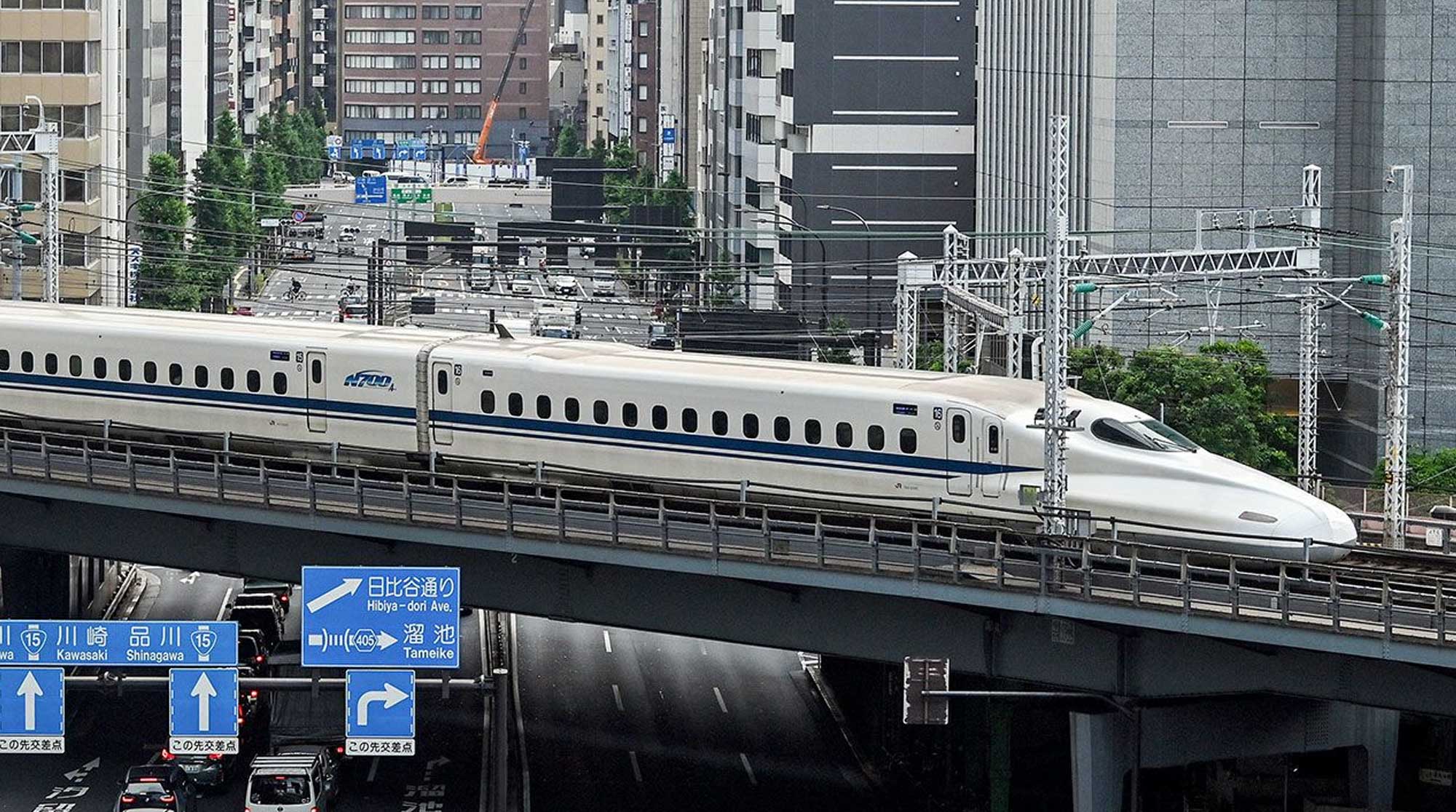
In 1964, a train left Tokyo for Osaka and changed what rail could be. Japan’s Shinkansen showed that trains could deliver high-speed intercity travel with remarkable regularity. Six decades on, high-speed networks connect cities across continents, while aviation keeps shrinking the time needed to cross countries and oceans.
Today, the pursuit of speed reaches far beyond trains. Engineers are refining electric propulsion, developing magnetic levitation and exploring new frontiers in aviation. Governments are investing in faster links, and businesses increasingly treat time as a strategic resource.
Yet every advance raises a fundamental question. When transport becomes faster, does life become better, or do expectations simply move faster too?
WHY THIS MATTERS
Speed influences far more than the duration of a journey. It can widen access to employment, connect businesses with new markets, strengthen regional economies and change where people choose to live.
But faster mobility also demands investment, energy, infrastructure and careful planning. A technology that saves substantial time on one route may offer little value on another. The challenge is not to pursue speed everywhere, but to understand where it creates meaningful progress.
01 | THE ENGINEERING OF GOING FASTER
Speed is among transport engineering’s most demanding objectives. As trains accelerate, aerodynamic drag rises sharply, energy consumption climbs, and the requirements for track geometry, braking, stability and signalling become more stringent.
Japan’s Shinkansen, France’s TGV and China’s vast network take different approaches to the same challenge, yet their performance depends on integrated systems rather than top speed alone: rolling stock, dedicated infrastructure, power supply, train control and maintenance. Aviation poses a different equation, balancing aerodynamic efficiency, propulsion, payload and range against safety and environmental limits. Road vehicles face limits of their own, from congestion and braking distance to energy use and highway capacity.
Emerging technologies may push those boundaries. Magnetic levitation reduces reliance on wheel–rail contact, and advances in electric propulsion, lightweight materials and digital control offer routes to better efficiency and performance. But engineering possibility is not the same as practical value. The fastest technology is not necessarily the most affordable, accessible or efficient answer for a particular journey.
02 | WHEN TIME BECOMES ECONOMIC VALUE
A faster journey can change the geography of opportunity. When two cities are linked by frequent, reliable high-speed rail, they may begin to function as a shared economic region. Businesses gain access to a wider labour market, professionals can attend meetings without staying overnight and visitors can reach destinations once considered inconvenient.
The scale of investment is striking. The International Union of Railways’ High-Speed Rail Atlas 2025 counts more than 67,700 km of high-speed lines worldwide, with China accounting for more than 47,800 km, over two-thirds of the total. About 5,000 high-speed trainsets run every day, carrying more than 3 billion passengers a year, roughly 1,000 billion passenger-kilometres. More than 16,000 km of new line is under construction.
Those figures show where governments are placing their bets. They do not show that every corridor earns an equivalent return. The value of time savings depends on who benefits, how often people travel, what alternatives exist and whether the connection supports productive economic activity. A faster railway can strengthen a region, but it cannot substitute for sound urban planning, employment opportunities or reliable local transport.
03 | THE RACE BETWEEN RAIL, ROAD AND AIR
High-speed rail occupies a distinctive place in the transport system. On suitable intercity routes it can compete with aviation by offering city-centre access, frequent departures and fewer airport procedures. Aircraft keep decisive advantages over long distances and where direct rail links are impractical, cars offer flexibility for dispersed destinations, and coaches can provide economical travel with modest infrastructure.
The comparison therefore has to go beyond top speed. A passenger’s real journey includes getting to the departure point, waiting, the main journey and onward travel. European data support a rule of thumb that where terminal-to-terminal rail times fall under about three and a half hours, rail captures more than half of the combined air and rail market. When Spain’s AVE cut the Madrid–Seville journey from six hours to two hours 15 minutes in 1992, rail’s share of that market rose from 33% to 83.6%, according to UIC figures. In 2007, the year before the high-speed line opened, Madrid–Barcelona was Europe’s busiest air route, with almost five million air passengers against 800,000 by rail.
But an infrequent train with poor connections can lose that advantage. The most effective systems do not force one mode to dominate. They combine rail, aviation, road and local transit according to the needs of each corridor.
04 | IS THE PLANET BETTER OFF?
The environmental case for speed is more complicated than it first appears. The European Environment Agency’s analysis of EU passenger transport for 2014 to 2018 found that trains were the most efficient form of motorised passenger transport, with emissions per passenger-kilometre a fraction of most other modes, while flights and cars were the least efficient. Its later “Train or plane?” assessment concluded that rail is a sensible choice against aviation, and that high-speed trains benefit from high occupancy. It also noted that aviation’s non-CO₂ effects add to its climate impact, though they remain uncertain.
The full picture is wider than the operating figures. It includes infrastructure construction, land use, electricity generation, maintenance and the transport activity displaced. A new line through difficult terrain can require extensive tunnels, bridges and other energy-intensive works. Occupancy matters too: a well-used train spreads its energy needs across many passengers, while an underused one struggles to deliver the same environmental and financial benefits.
So, the sensible question is not whether high-speed rail is universally sustainable. It is whether a specific investment produces a better long-term outcome than the realistic alternatives.
05 | THE COST OF CHASING SPEED
High-speed infrastructure demands substantial capital, long construction periods and sustained maintenance. Land acquisition, complex civil engineering, stations, signalling and electrification can make projects financially demanding.
India’s Mumbai–Ahmedabad corridor shows both the ambition and the complexity. The 508 km line, designed for speeds of up to 320 km/h, is being built with Japanese technology and a Japanese loan covering 81% of its cost of around US$17 billion. Work began in 2017. The first 100 km section, between Surat and Vapi, is due to open in August 2027, and the full corridor by 2029. The project was first estimated at ₹1.08 lakh crore, and a government monitoring report this year put physical progress at about 62%, while indicating that the final cost could rise to around ₹2 lakh crore. Beyond the passenger service, it is building domestic engineering capability. Its long-term value will depend on service performance, demand, fares, connectivity and the wider economic benefits it delivers.
Japan’s own maglev shows the same tension at the frontier. The Chuo Shinkansen, designed for 500 km/h, would link Tokyo and Nagoya in 40 minutes. Its 2027 opening has been abandoned, JR Central’s estimate for the Tokyo–Nagoya section has roughly doubled to 11 trillion yen, and, with construction in Shizuoka only cleared in July 2026, the earliest opening is now 2034 or later, with some reports pointing to 2036.
The same principle applies everywhere. A costly high-speed line can be justified where demand is strong and time savings are large. Elsewhere, upgrading conventional rail, running more frequent services or improving connections may deliver more for less. Speed is valuable, but the opportunity cost of achieving it must also be measured.
06 | THE NEXT FRONTIER IS SMARTER MOBILITY
The future may not belong only to vehicles that travel faster. It may belong to systems that make journeys more predictable, connected and efficient. Digital signalling can raise network capacity and improve control. Predictive maintenance can identify faults before they cause disruption. Integrated ticketing and coordinated timetables can cut the time passengers spend waiting and transferring. Advances in batteries, alternative fuels and electric propulsion may also shift the balance between modes, and magnetic levitation may serve specialised corridors where its performance justifies its cost.
These innovations point towards a broader definition of speed. A journey becomes faster in practical terms when delays fall, connections improve and passengers spend less time navigating the system, even if the vehicle’s top speed is unchanged. The next mobility revolution may therefore be measured less by record-breaking speeds and more by the quality of the complete journey.
emBRWace Perspective
The pursuit of speed has shaped transport history, from the railway age to commercial aviation and today’s high-speed networks. It has opened economic opportunities, shortened journeys and extended the reach of cities.
But speed is a means, not an end. Its value depends on accessibility, affordability, reliability, energy efficiency and the opportunities it enables. A system that moves a few people exceptionally fast may deliver less public value than one that moves many people reliably and conveniently.
For the global mobility ecosystem, the priority is to match the right technology to the right journey. High-speed rail will be transformative on suitable corridors. Conventional rail, road transport, aviation and emerging technologies will remain essential elsewhere.
The objective is not simply to move faster. It is to make mobility work better.
Thought to Take Away
The real measure of speed is not how quickly we move, but how much better it enables us to live, work and connect.
By the Numbers
67,700 km
of high-speed rail lines are counted worldwide in the UIC’s High-Speed Rail Atlas 2025, with China accounting for more than 47,800 km.
3 billion
passengers a year travel on high-speed rail, about 1,000 billion passenger-kilometres, and more than 16,000 km of new line is under construction.
83.6%
was rail’s share of the Madrid–Seville air and rail market after the AVE opened in 1992, up from 33% on the conventional train, according to UIC figures.
3½ hours
is the rule-of-thumb rail journey time under which European data show rail capturing more than half of the combined air and rail market.
₹1.08 lakh crore
was the original estimate for India’s Mumbai–Ahmedabad high-speed rail line, which a government monitoring report indicates could rise to around ₹2 lakh crore, as reported.
11 trillion yen
is JR Central’s estimate for the Tokyo–Nagoya maglev section, roughly double the initial projection.
Sources: International Union of Railways (UIC), High-Speed Rail Atlas 2025; European Environment Agency, “Rail and waterborne transport: best for low-carbon motorised transport” and “Train or plane?”; Transportation Research Board, “Quantifying the Scale of Air/Rail Complementarity and Air/Rail Competition in Europe and the United States”; UIC modal-share data on the Madrid–Seville AVE; Eurostat data on the Madrid–Barcelona air route as reported by Railway Technology; Government of India and monitoring-report coverage of the Mumbai–Ahmedabad High-Speed Rail project; JR Central, Japan Times, Jiji Press and Kyodo reporting on the Chuo Shinkansen