On 30 October 1930, Sakichi Toyoda died without seeing the automotive empire that would emerge from the industrial enterprise he had built. His legacy, however, was already shaping that future. The Japanese inventor’s pioneering work in automatic looms established the business foundations, engineering culture and family ambition that helped his son, Kiichiro Toyoda, pursue an audacious new direction — manufacturing automobiles.
The Industrial Roots of Toyota
Sakichi Toyoda’s revolution began not with an engine, but with a loom. Born in Japan in 1867, he devoted his career to improving textile machinery, developing inventions that made production more efficient and reliable. His Type G automatic loom, completed in 1924, could change its shuttle automatically and stop when a fault occurred — an approach that reduced waste and helped protect product quality.
In 1926, he established Toyoda Automatic Loom Works, creating the industrial enterprise that became Toyota Industries Corporation. A pivotal development followed in 1929, when the company agreed to transfer overseas production and marketing rights for the Type G loom to British manufacturer Platt Brothers. The deal generated funds that helped support the family’s next industrial venture.
That opportunity was crucial. Sakichi’s success in machinery gave the family both the resources and the confidence to consider a sector far removed from textiles — the emerging automobile industry.
From Automatic Looms to Automobiles
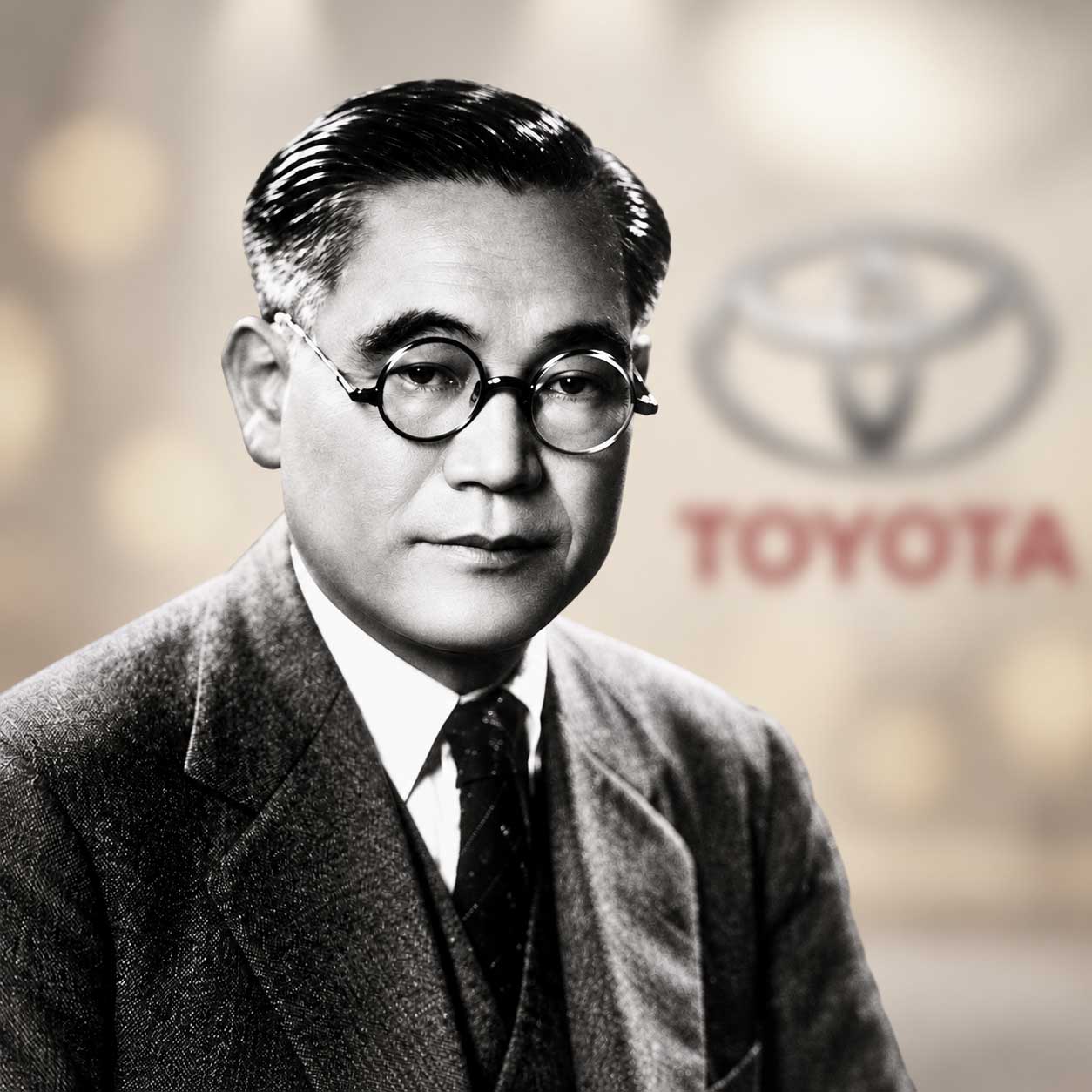
Sakichi encouraged his son, Kiichiro Toyoda, to explore automobile manufacturing. Kiichiro recognised that Japan’s future would require domestic engineering capability in a field then dominated by established overseas manufacturers. The challenge was immense: building cars demanded new expertise in engines, vehicle design, production methods and supply chains.
After Sakichi’s death, Kiichiro carried the vision forward. Toyota’s automotive development gathered pace in the 1930s, producing its first passenger-car prototype in 1935. In 1937, Toyota Motor Co., Ltd. was established as a separate company, turning the family’s automotive ambitions into a dedicated manufacturing business.
Sakichi did not design Toyota’s first car, nor did he live to see the motor company established. His contribution was more foundational: he built the industrial enterprise that helped finance the transition and fostered a culture of practical invention, quality and continuous improvement.
The connection between loom and automobile was therefore more than a family story. It was a transfer of industrial thinking — from machinery that improved textile production to manufacturing principles that would later become central to Toyota’s automotive identity.
The journey towards Toyota’s automotive future began with Sakichi Toyoda’s belief that better machines could transform an industry.